In the dynamic landscape of commercial real estate across Africa, efficient and reliable vertical transportation is not just a convenience—it's a necessity. As buildings reach new heights and demand for seamless movement intensifies, the choice of elevator system becomes a critical decision for developers, architects, and building owners. Among the various options available, traction elevators stand out as a superior solution for commercial applications. PE Lifts Group, a premier elevator engineering conglomerate headquartered in West Africa, with its subsidiaries PE Lifts, Dove Lifts, and PE Lifts Services, proudly recommends traction elevators for their unparalleled performance, energy efficiency, and adaptability to modern commercial structures.
What Is a Traction Elevator?
A traction elevator operates using a system of ropes, a sheave (a grooved pulley), and a counterweight. The elevator car and the counterweight are attached to opposite ends of the ropes, which loop over the sheave. As the electric motor rotates the sheave, it moves the ropes, causing the elevator car and counterweight to move in opposite directions. This design ensures a balanced system, reducing the power required to lift the car and enhancing overall efficiency. Unlike hydraulic elevators that use fluid pressure, traction elevators rely on friction between the ropes and the sheave, making them ideal for taller buildings and higher speeds.
How Does a Traction Elevator Work?
The operation of a traction elevator is a marvel of engineering precision. At its core, an electric motor drives the sheave, which in turn moves the steel ropes. These ropes are securely fastened to the elevator car and a counterweight. The counterweight typically weighs approximately the same as the elevator car when it is half-full. This balance significantly reduces the workload on the motor, as it primarily needs to overcome the difference in weight between the car and the counterweight, rather than lifting the entire load. As the motor rotates the sheave, the friction between the ropes and the sheave causes the car to ascend or descend. Advanced control systems, often incorporating Variable Voltage Variable Frequency (VVVF) drives, ensure smooth acceleration, deceleration, and precise leveling at each floor. This sophisticated mechanism allows for high speeds and capacities, making them a preferred choice for any discerning traction elevator company.
Why Are Traction Elevators Ideal for Commercial Buildings?
For commercial buildings, the demands on an elevator system are rigorous. High traffic, frequent stops, and the need for rapid, efficient vertical transport are paramount. Traction elevators are uniquely suited to meet these challenges, offering a blend of speed, capacity, and energy efficiency that hydraulic systems cannot match. Their design allows for greater travel distances and higher speeds, which is crucial for multi-story office buildings, hotels, and other high-rise commercial structures. Furthermore, the balanced counterweight system contributes to significant energy savings over the lifespan of the elevator, a key consideration for sustainable building operations. PE Lifts Group understands these critical requirements and consistently recommends traction solutions.
What Are the Main Benefits of Traction Elevators?
Energy Efficiency
One of the most compelling advantages of traction elevators is their superior energy efficiency. The counterweight system offsets a significant portion of the car's weight, meaning the motor expends less energy to move the elevator. Modern traction elevators, especially those equipped with regenerative drives, can even feed energy back into the building's power grid during descent or light-load ascent, leading to substantial reductions in electricity consumption. This makes them an environmentally friendly and cost-effective choice for any commercial elevator company looking to minimize operational expenses.
Faster Travel Speeds
In commercial environments, time is money. Traction elevators are designed for speed, capable of reaching velocities far exceeding those of hydraulic systems. This rapid travel minimizes waiting times and ensures efficient movement of people throughout the building, enhancing productivity and user satisfaction. For high-rise buildings, faster travel speeds are indispensable, making traction elevators the go-to solution for traction elevator installation.
Higher Capacity
Commercial buildings often experience peak traffic periods, requiring elevators that can handle a large volume of passengers or heavy freight. Traction elevators are inherently capable of accommodating higher capacities, both in terms of weight and the number of passengers. Their robust design and powerful motors ensure reliable performance even under heavy loads, making them a versatile component of comprehensive elevator solutions.
Better Performance in High Rise Buildings
As urban centers grow vertically, the need for elevators that can efficiently serve dozens of floors becomes critical. Traction elevators excel in high-rise applications, offering smooth, consistent performance over long travel distances. Unlike hydraulic systems, which become less efficient and require larger machine rooms as height increases, traction elevators maintain their efficiency and compact footprint, making them the definitive choice for skyscrapers and tall commercial towers. PE Lifts Group has extensive experience with such installations across Africa.
Key Benefits Comparison
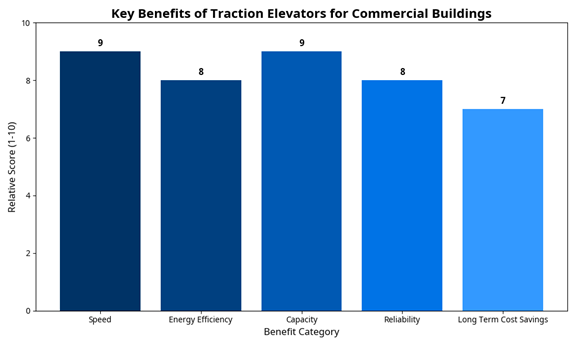
Figure 1: Comparison of key benefits for traction elevators in commercial settings.
Where Are Traction Elevators Commonly Used?
Office Buildings
From bustling corporate headquarters to multi-tenant office complexes, traction elevators are the backbone of vertical transportation in office buildings. Their speed and capacity ensure that employees, clients, and visitors can move quickly and efficiently between floors, minimizing delays during peak hours. PE Lifts Group has installed numerous traction elevators in prominent office buildings throughout West Africa.
Hotels
In the hospitality sector, a smooth, quiet, and reliable elevator experience is crucial for guest satisfaction. Traction elevators provide just that, offering comfortable rides and rapid access to rooms, conference facilities, and amenities. Their ability to handle continuous operation with minimal downtime is invaluable for hotels of all sizes.
Hospitals
Hospitals require specialized elevator systems that prioritize patient comfort, safety, and the swift transport of medical equipment and personnel. Traction elevators, particularly those designed for hospital use, offer the necessary speed, capacity, and smooth operation to meet these critical demands, often incorporating features like wider doors and precise leveling for stretchers and wheelchairs. PE Lifts Group ensures that every traction elevator installation in healthcare facilities meets stringent international standards.
Shopping Malls
Shopping malls are high-traffic environments where elevators play a vital role in customer flow and accessibility. Traction elevators efficiently move shoppers between retail levels, often alongside escalators and moving walks, contributing to a positive and convenient shopping experience. Their durability and reliability are essential for continuous operation during extended business hours.
Residential Towers
While often associated with commercial use, traction elevators are also increasingly prevalent in high-rise residential towers. They provide residents with quick and comfortable access to their homes, parking, and communal facilities, enhancing the overall living experience in modern urban developments.
How Does PE Lifts Group Handle Traction Elevator Installation?
PE Lifts Group, a leading traction elevator company in Africa, offers a comprehensive, end-to-end approach to traction elevator installation, leveraging the specialized expertise of its constituent companies: PE Lifts, Dove Lifts, and PE Lifts Services. This integrated structure ensures seamless project execution from initial design to long-term maintenance.
The Role of PE Lifts
While PE Lifts primarily specializes in pneumatic elevator systems, its deep engineering expertise within the PE Lifts Group contributes to the overall technical knowledge base and innovative solutions applied across all elevator types. This foundational engineering strength supports the group's commitment to cutting-edge vertical mobility.
The Role of Dove Lifts
Dove Lifts is the specialist arm of PE Lifts Group focused on traction, MRL (Machine Room Less), and conventional elevator systems for mid to high-rise buildings. Dove Lifts handles the core aspects of traction elevator installation, including detailed technical assessments, custom design, equipment supply, and precision on-site fitting. Their team of certified engineers ensures that every installation adheres to international safety standards like EN 81 and ASME A17.1, delivering reliable mechanical performance and premium aesthetics.
The Role of PE Lifts Services
PE Lifts Services provides critical after-market support, ensuring the longevity and optimal performance of every traction elevator installation. Their services include comprehensive Annual Maintenance Contracts (AMCs), 24/7 emergency callouts, modernization projects for aging systems, and expert technical consulting. This dedicated support ensures maximum uptime and safety, solidifying PE Lifts Group's reputation as a trusted partner for commercial elevator company needs.
Why Do Building Owners Choose PE Lifts Group?
Building owners across Africa choose PE Lifts Group for their unparalleled commitment to safety, quality, and regional expertise. As a leading traction elevator company, PE Lifts Group offers:
- Integrated Solutions: A single, accountable partner for the entire elevator lifecycle, from design and traction elevator installation to maintenance and modernization.
- World-Class Standards: Adherence to international safety standards (EN 81, ISO 9386, ASME A17.1) and local regulatory codes.
- Deep Regional Expertise: Over 15 years of experience operating in West Africa, understanding local conditions, logistics, and infrastructure challenges.
- Dedicated Support: 24/7 response capability with certified field engineers across all active markets, ensuring maximum uptime.
- Advanced Technology: Integration of smart control systems, regenerative drives, and advanced safety features for superior performance and energy efficiency.
What Should You Consider Before Installing a Traction Elevator?
Before proceeding with a traction elevator installation, several key factors should be carefully considered to ensure the chosen system aligns with your building's specific needs and long-term objectives:
- Building Height and Traffic: Traction elevators are best suited for buildings with more than four or five stories and high traffic volumes.
- Speed Requirements: Determine the desired travel speed to minimize waiting times, especially in high-rise commercial settings.
- Capacity Needs: Assess the maximum anticipated load, including passengers and freight, to select an elevator with adequate capacity.
- Energy Efficiency Goals: Consider the long-term operational costs and environmental impact. Modern traction elevators with regenerative drives offer significant energy savings.
- Maintenance and Support: Evaluate the availability of reliable maintenance services and spare parts. PE Lifts Group, through PE Lifts Services, offers comprehensive support.
- Budget: While the initial traction elevator installation cost might be higher than hydraulic systems, consider the long-term savings in energy and maintenance.
- Space Availability: Traction elevators typically require a machine room (though MRL options exist) and a hoistway. Ensure adequate space is allocated in the building design.
Traction Elevators vs Hydraulic Elevators
| Feature | Traction Elevators | Hydraulic Elevators |
| Mechanism | Ropes, sheave, counterweight, electric motor | Piston, hydraulic fluid, pump, electric motor |
| Building Height | Mid to high-rise (5+ stories) | Low to mid-rise (2-5 stories) |
| Speed | Fast to very fast (up to 4.0 m/s) | Slow to moderate (up to 1.0 m/s) |
| Energy Use | Highly energy-efficient | Less energy-efficient |
| Machine Room | Typically required (MRL options available) | Can be machine-room-less |
| Ride Quality | Smooth, quiet, comfortable | Can be less smooth |
| Capacity | High capacity | Moderate capacity |
| Installation Cost | Higher initial cost | Lower initial cost |
| Maintenance Cost | Moderate to high | Moderate |
| Environmental Impact | Lower (no fluid, energy regeneration) | Higher (fluid disposal, higher energy use) |
Frequently Asked Questions (FAQs)
Q1: What is the maximum height a traction elevator can serve?
A: Traction elevators can serve buildings of virtually any height, from mid-rise structures to super-tall skyscrapers, often exceeding 60 floors. This makes them the ideal choice for modern urban developments.
Q2: Are traction elevators more expensive to install than hydraulic elevators?
A: Generally, the initial traction elevator installation cost is higher than that of hydraulic elevators. However, their superior energy efficiency, faster speeds, and longer lifespan often result in lower long-term operational and maintenance costs, providing a better return on investment for commercial buildings.
Q3: How often do traction elevators require maintenance?
A: While traction elevators are highly reliable, regular maintenance is crucial for optimal performance and safety. PE Lifts Services recommends comprehensive Annual Maintenance Contracts (AMCs) with scheduled preventive visits, typically monthly or bi-monthly, depending on usage. This proactive approach minimizes downtime and extends the elevator's lifespan.
Q4: Can PE Lifts Group modernize an existing traction elevator system?
A: Absolutely. PE Lifts Services specializes in modernization projects, upgrading aging traction elevator systems with the latest technology, including control systems, drives, cabin interiors, and safety features. This enhances efficiency, safety, and ride quality without the need for a complete replacement.
Q5: What safety standards do PE Lifts Group's traction elevators comply with?
A: PE Lifts Group ensures all its traction elevator installation projects comply with stringent international safety standards, including EN 81 (European Standards) and ASME A17.1 (American Society of Mechanical Engineers), as well as relevant local regulatory codes across West Africa. Safety is our top priority.
Q6: How do traction elevators contribute to a building's energy efficiency?
A: Traction elevators are inherently more energy-efficient due to their counterweight system, which balances the car's weight. Modern systems with VVVF drives and regenerative braking can further reduce energy consumption by up to 35% by feeding power back into the grid, making them a sustainable choice for commercial buildings.
Q7: What is the typical lifespan of a traction elevator?
A: With proper traction elevator maintenance and periodic modernization, a well-installed traction elevator system can have a lifespan of 20 to 30 years or even more. Regular servicing by experts like PE Lifts Services is key to achieving this longevity.
Q8: Does PE Lifts Group provide elevator solutions beyond installation?
A: Yes, PE Lifts Group offers comprehensive elevator solutions that cover the entire lifecycle of an elevator. This includes initial engineering design, supply, traction elevator installation, ongoing maintenance through PE Lifts Services, and modernization, ensuring a single point of accountability and expertise.
Conclusion
Choosing the right vertical transportation system is a pivotal decision for any commercial building. Traction elevators offer a compelling combination of speed, capacity, energy efficiency, and reliability, making them the ideal choice for modern commercial structures across Africa. PE Lifts Group, through the specialized expertise of Dove Lifts for traction elevator installation and PE Lifts Services for maintenance and modernization, stands as the leading traction elevator company in the region, delivering world-class elevator solutions tailored to the unique demands of each project.