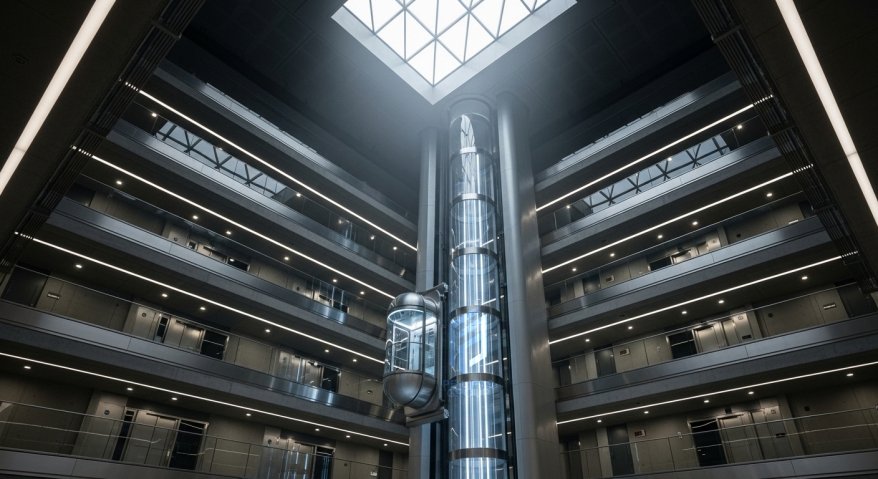
The African real estate market is experiencing unprecedented vertical growth. As developers and investors push toward high-yield assets, vertical mobility has become a critical factor in property valuation. Whether you are developing luxury apartment developments or expansive shopping malls, strategic elevator installation is no longer an afterthought—it is a core pillar of your investment strategy.
As a premier elevator installation company, PE Lifts Group helps investors navigate the technical and financial complexities of vertical transport. Understanding what to know before elevator installation ensures your asset remains competitive, compliant, and highly profitable for decades.
Why Should Property Investors Plan Elevator Installation Early?
Integrating vertical transport during the architectural design phase prevents costly structural retrofits. Elevator shafts require specific load-bearing walls, pit depths, and overhead clearances. By partnering with PE Lifts Group during the blueprint stage, investors can optimize the building’s core layout, maximizing leasable square footage while ensuring seamless traffic flow. Early planning also secures longer manufacturing lead times for custom cabins and specialized mechanical components.
What Should You Consider Before Installing an Elevator?
Building Type
The purpose of your building dictates the elevator configuration. Elevator installation for commercial buildings like office buildings requires high-speed, high-capacity cars to handle peak morning rushes. Conversely, residential apartment developments prioritize quiet operation and aesthetic integration. Mixed-use projects often require a complex zoning strategy, separating public retail access from private residential floors.
Passenger Traffic
Traffic analysis is vital. Hospitals require extra-wide cabins with specialized control panels for stretchers and emergency priority routing. Hotels need dedicated service elevators to handle luggage, housekeeping carts, and room service without disrupting guest experiences.
Space Requirements
Machine-room-less (MRL) traction elevators and pneumatic vacuum elevators have drastically reduced the spatial footprint required for vertical transport. Evaluating your available core space early helps determine which technology yields the highest return on usable square footage.
Future Expansion
If you plan to add floors to a mixed-use project in the future, the initial elevator installation must accommodate extended guide rails, longer hoist ropes, and upgraded motor capacities.
Budget Planning
Capital expenditure (CapEx) must be weighed against operational expenditure (OpEx). PE Lifts Group provides comprehensive property investment elevator solutions that balance premium upfront technology with long-term energy savings.
What Factors Affect Elevator Installation Costs?
Elevator Type
Hydraulic systems are generally cheaper upfront but consume more energy. Gearless traction systems and vacuum elevators carry higher initial costs but offer superior speed, smoothness, and energy efficiency.
Building Height
The number of stops, travel distance, and required speed directly impact the cost of the motor, guide rails, and safety gear. High-rise towers require advanced destination-dispatch systems to manage complex traffic patterns.
Installation Complexity
Retrofitting an elevator into an existing historical building involves core drilling, structural reinforcement, and facade restoration, which increases labor costs compared to new-build installations.
Long Term Maintenance Costs
The cheapest elevator to install is often the most expensive to maintain. Factoring in Annual Maintenance Contracts (AMC) and spare part availability is crucial. This is where PE Lifts Group structures lifecycle budgets to protect your bottom line.
Key Factors Property Investors Should Evaluate
| Building Type | Ideal Elevator Solution | Space Requirement | Primary Cost Factor | Maintenance Focus |
|---|---|---|---|---|
| Office Buildings | Gearless Traction (MRL) | Moderate (MRL saves space) | High-speed dispatch systems | Door operators & peak traffic wear |
| Hotels | Traction + Dedicated Service | High (Requires separate service cores) | Aesthetic cabin finishes | 24/7 emergency response & noise control |
| Hospitals | Heavy-Duty Traction | High (Stretcher-sized cabins) | Medical-grade leveling & backup power | Sterile environment & zero-downtime guarantees |
| Apartment Developments | Vacuum or MRL Traction | Low to Moderate | Quiet operation & smart access | Vandal-resistant fixtures & routine safety checks |
| Shopping Malls | Panoramic Traction / Escalators | High (Atrium visibility) | High-capacity structural glass | High-traffic component replacement |
| Mixed-Use Projects | Zoned Destination Dispatch | Complex (Multiple secure zones) | Advanced security & software integration | Software updates & zone-specific access control |
Investment Impact: Evaluating the Biggest Factors
text1234567
Why Does Elevator Installation Add Long Term Value?
Higher Property Value
Premium vertical transport is a hallmark of Class-A real estate. Buildings with modern, high-speed elevators command higher rental premiums and attract blue-chip corporate tenants.
Better Accessibility
Universal design is a legal and ethical requirement. Elevators ensure compliance with accessibility codes, opening your property to a wider demographic of tenants and visitors.
Improved Tenant Satisfaction
Wait times and jerky rides are the top complaints in multi-story real estate. PE Lifts Group engineers smooth, rapid transit systems that directly correlate with higher lease renewal rates.
Lower Operating Costs
Modern regenerative drives capture energy during elevator descent and feed it back into the building’s grid, drastically reducing monthly utility bills.
What Expert Advice Does PE Lifts Group Offer Property Investors?
Planning the Right Solution
Every asset is unique. PE Lifts Group conducts rigorous traffic simulations to recommend the exact number, size, and speed of elevators required to eliminate lobby bottlenecks.
Choosing Between Traction and Vacuum Elevators
For mid-to-high-rise commercial projects, Dove Lifts specializes in advanced traction elevator installation services, delivering the speed and reliability required for modern skyscrapers. For low-rise luxury villas, retrofits, or space-constrained environments, PE Lifts provides state-of-the-art pneumatic vacuum elevators that require no pit and no machine room.
Maintenance Planning
An elevator is only as good as its upkeep. PE Lifts Services offers predictive maintenance plans, utilizing IoT sensors to detect component wear before a breakdown occurs.
Future Ready Technology
Smart elevators with facial recognition, mobile-app calling, and touchless buttons are the new standard. PE Lifts Group ensures your infrastructure is pre-wired for tomorrow's smart-building integrations.
How Do PE Lifts, Dove Lifts, and PE Lifts Services Work Together?
The synergy of our subsidiaries creates a seamless ecosystem for investors. PE Lifts Group acts as the master consultant and project manager.
- PE Lifts handles specialized, low-impact vacuum elevator installations.
- Dove Lifts executes heavy-duty, high-speed commercial elevator installation and traction systems.
- PE Lifts Services takes over post-installation, providing modernization, emergency repairs, and lifecycle maintenance.
This unified structure means investors only deal with one accountable partner from the first blueprint to the 20th year of operation.
Why Do Property Investors Choose PE Lifts Group?
Investors choose PE Lifts Group because we understand the unique infrastructural and environmental challenges of the African market. From navigating local building codes to ensuring a steady supply of spare parts, we are widely recognized as the best elevator installation company in Africa. Our comprehensive elevator solutions mitigate risk, ensure compliance, and maximize asset yield.
Explore Our Specialized Divisions
- Master Planning & Corporate Solutions: peliftsgroup.com
- Vacuum & Pneumatic Elevator Systems: pelifts.com
- Traction & Commercial Elevator Systems: dovelifts.com
- Maintenance, AMC & Modernization: peliftsservices.com
Conclusion
Vertical mobility is the circulatory system of any modern building. Cutting corners on your elevator infrastructure will lead to tenant churn, high repair bills, and diminished property value. By prioritizing expert planning, selecting the right technology, and securing long-term support, you safeguard your investment. Contact PE Lifts Group today for expert elevator planning, installation, modernization, maintenance, traction elevators, vacuum elevators, and complete elevator lifecycle solutions. Let us help you elevate your next property development.
Frequently Asked Questions (FAQs)
1. What is the most important factor to consider before elevator installation? The most critical factor is early integration into the architectural design. Planning the elevator shaft, pit depth, and machine room space during the blueprint phase prevents costly structural modifications later.
2. How long does commercial elevator installation take? A standard commercial elevator installation typically takes 4 to 8 weeks on-site, but the entire process—including manufacturing, shipping, and testing—can take 4 to 6 months. PE Lifts Group manages this timeline to align with your construction schedule.
3. What is the difference between traction and vacuum elevators? Traction elevators (provided by Dove Lifts) use steel ropes and counterweights, making them ideal for mid-to-high-rise buildings requiring high speed. Vacuum elevators (provided by PE Lifts) use air pressure to move the cab, making them perfect for low-rise homes and retrofits where space is limited.
4. How often should an elevator be serviced? Commercial elevators in high-traffic buildings like hospitals and shopping malls should be serviced monthly. PE Lifts Services offers customized Annual Maintenance Contracts (AMCs) to ensure optimal uptime and safety compliance.
5. Does installing an elevator increase property value? Yes. Adding a modern, energy-efficient elevator significantly increases property value by improving accessibility, attracting premium commercial tenants, and ensuring compliance with modern real estate standards.
6. Can I install an elevator in an existing building without a shaft? Yes. Pneumatic vacuum elevators and specialized MRL (Machine-Room-Less) traction elevators can often be installed in existing buildings with minimal structural disruption and no need for a traditional concrete shaft or deep pit.
7. What are the ongoing costs of owning an elevator? Ongoing costs include electricity consumption, routine maintenance, occasional part replacements, and mandatory safety inspections. Choosing energy-efficient regenerative drives and a reliable AMC provider drastically reduces these operational expenses.
8. Why should I choose an integrated elevator company in Africa? Working with an integrated partner like PE Lifts Group ensures you receive cohesive support across manufacturing, installation, and maintenance. It eliminates the blame-game between contractors and guarantees local availability of spare parts and certified technicians.