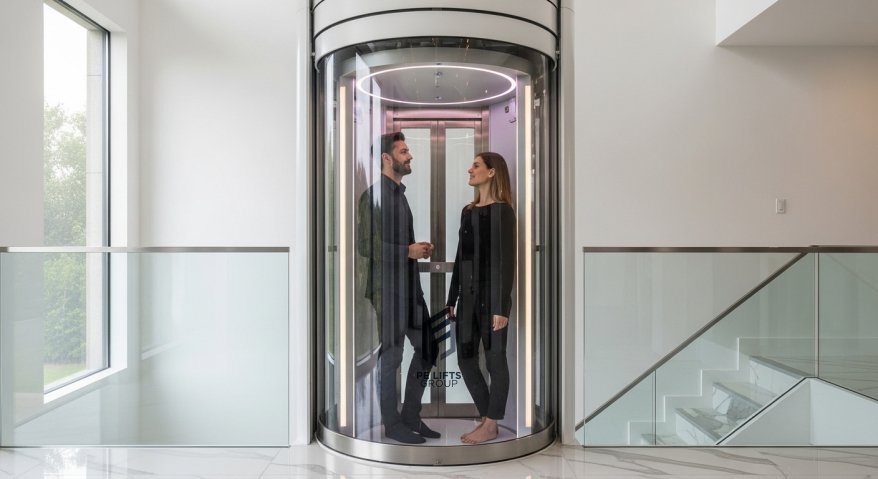
Pneumatic vacuum elevator technology represents a revolutionary approach to vertical mobility, using air pressure instead of cables or hydraulics to move passengers between floors. As West Africa's premier elevator engineering group, PE Lifts Group specializes in this innovative technology through its subsidiary PE Lifts, the region's leading authorized distributor of advanced pneumatic vacuum systems.
pelifts.com This guide explains how vacuum elevators work, their components, advantages, and applications for homeowners, architects, developers, and property managers across Africa.
What is a Pneumatic Vacuum Elevator?
A pneumatic vacuum elevator is a self-supporting lift system that operates using air pressure differences within a sealed cylindrical tube. Unlike traditional hydraulic or traction elevators, these systems require no machine room, no pit, and no structural reinforcements.
ng.linkedin.com PE Lifts specializes in pneumatic elevator systems for residential and commercial applications, offering vacuum-driven technology with minimal structural requirements.
www.thedovegroup.com The elevator cabin moves smoothly inside a transparent tube, creating a modern aesthetic while providing safe, efficient vertical transportation.
How Does Pneumatic Vacuum Elevator Technology Work?
Pneumatic vacuum elevator technology operates on a simple yet sophisticated principle of atmospheric pressure. A turbine at the top of the elevator shaft creates a partial vacuum above the cabin, allowing atmospheric pressure below to gently push the elevator upward.
pe-lifts.mailchimpsites.com The system uses a vacuum pump to generate areas of higher and lower atmospheric pressure within the cylinder hoistway, enabling smooth movement between floors.
www.instagram.com
For ascending operations, the vacuum system reduces air pressure above the cabin while normal atmospheric pressure below pushes it upward.
www.dovelifts.com The sealed tube maintains the pressure differential needed for controlled movement. This pneumatic lift technology eliminates the need for complex mechanical systems, making it cleaner, safer, and more energy-efficient than conventional elevators.
www.myjobmag.com
What Are the Main Components of a Vacuum Elevator?
A pneumatic vacuum elevator consists of several key components working together:
Sealed Cylindrical Tube: The transparent hoistway forms an airtight chamber where the cabin moves. The tube is typically made of high-strength polycarbonate or glass panels that provide both structural integrity and visual appeal.
x.com
Turbine or Vacuum System: Located at the top of the shaft, this powerful air turbine generates the suction required to create the vacuum.
www.vacuumelevators.com The turbine extracts air from the chamber above the cabin to initiate upward movement.
Elevator Cabin: The passenger compartment features an airtight seal built into the top, ensuring proper pressure differential is maintained during operation.
www.vacuumelevators.com Cabins come in various sizes, from compact single-passenger models to wheelchair-accessible configurations.
Control System: Advanced microprocessor controls manage the elevator's movement, floor selection, and safety functions with precision.
Safety Systems: Multiple safety features including automatic rescue devices (ARD), emergency brakes, and battery backup systems ensure passenger safety at all times.
peliftsgroup.com
How Does Air Pressure Move the Elevator Cabin?
The movement of a pneumatic vacuum elevator relies entirely on atmospheric pressure differentials. When a passenger selects an upper floor, the turbine system activates and removes air from the space above the cabin.
www.vacuumelevators.com This creates a partial vacuum, reducing the air pressure in the upper section of the tube.
Meanwhile, the air pressure below the cabin remains at normal atmospheric levels. This pressure difference creates an upward force that lifts the cabin smoothly.
pelifts.com The system precisely controls the rate of air removal to ensure comfortable acceleration and deceleration. The cabin's airtight seal prevents air from bypassing around it, maintaining the pressure differential needed for efficient operation.
elevation.fandom.com
How Does the Elevator Descend Safely?
Descending in a pneumatic vacuum elevator requires no electricity, making it one of the most energy-efficient vertical transportation solutions available. To lower the cabin, a controlled valve system gently releases air into the space above the cabin.
www.nibavlifts.us This equalizes the pressure differential gradually, allowing gravity to lower the cabin in a smooth, controlled descent.
The zero-energy descent feature means the system consumes power only when ascending.
www.facebook.com Safety mechanisms monitor the descent speed continuously, and if any irregularity is detected, the system automatically engages braking mechanisms. In the event of a power failure, the automatic rescue device (ARD) activates, using battery backup to ensure the cabin descends safely to the lowest floor and the doors open.
www.audubon.org
What Structural Requirements Does Pneumatic Technology Have?
One of the most significant advantages of pneumatic vacuum elevator technology is its minimal structural requirements. These self-supporting systems require:
No Machine Room: The turbine system is integrated into the top of the tube, eliminating the need for a separate machine room.
a-z-animals.com
No Pit: Unlike traditional elevators, pneumatic systems don't require an underground pit. The elevator can be installed directly on the finished floor.
www.outdooralabama.com
No Structural Reinforcements: The self-supporting design means no additional structural reinforcements are typically needed.
www.shutterstock.com
Minimal Space: The compact footprint makes these elevators ideal for retrofitting into existing homes or buildings with space constraints.
Standard Electrical Supply: Most models operate on single-phase power, simplifying electrical requirements.
peliftsservices.com
This minimal infrastructure requirement allows installation in just 2-3 days with zero civil works, making it perfect for existing buildings.
ng.linkedin.com
Where Can Pneumatic Vacuum Elevators Be Used?
Pneumatic vacuum elevators are versatile solutions suitable for various applications:
Residential Properties: Private residences, villas, townhouses, duplexes, and penthouses benefit from the compact size and aesthetic appeal of pneumatic elevators.
peliftsgroup.com
Commercial Buildings: Small to medium commercial properties can utilize these systems for low-rise vertical transportation.
Hospitality Sector: Hotels and resorts use pneumatic elevators for guest accessibility, particularly in boutique properties.
Healthcare Facilities: Wheelchair-accessible models like the PVE 52 provide crucial mobility solutions for medical facilities and assisted living centers.
www.instagram.com
Retrofit Projects: Existing buildings benefit most from pneumatic technology due to the minimal structural modifications required.
pe-lifts.mailchimpsites.com
PE Lifts Group serves clients across Nigeria, Ghana, Senegal, Côte d'Ivoire, Benin Republic, and Togo, providing pneumatic solutions throughout West Africa.
www.homeelevatorks.com
What Are the Main Advantages of This Technology?
Pneumatic vacuum elevator technology offers numerous benefits:
Energy Efficiency: Zero energy consumption during descent and minimal power usage during ascent significantly reduce operational costs.
www.yelp.com
Space Optimization: No machine room, pit, or structural reinforcements maximize usable building space.
Quick Installation: Most installations complete within 2-3 days without construction mess or structural modifications.
peliftsgroup.com
Safety: No cables to snap, no oil to leak, and automatic safety systems provide inherent safety advantages.
pelifts.com
Aesthetic Appeal: The transparent cylindrical design creates a modern, luxurious visual element in any building.
Low Maintenance: Fewer moving parts mean significantly reduced maintenance requirements compared to traditional elevators.
www.vacuumelevators.com
Eco-Friendly: No lubricants or oils, minimal electricity consumption, and 100% recyclable materials make this the green alternative.
www.home-elevator.net
Accessibility: Wheelchair-accessible models ensure inclusive mobility for all users.
What Are the Limitations of Pneumatic Elevators?
While pneumatic vacuum elevator technology offers many advantages, it's important to understand its limitations:
Height Restrictions: Maximum rise is typically limited to 15 meters (approximately 5 floors) for most models.
cubelifts.com
Capacity Limitations: Standard models accommodate 1-3 passengers, making them unsuitable for high-traffic commercial applications requiring large capacity.
Building Height: Best suited for low to mid-rise buildings; high-rise structures require traditional traction or MRL systems like those offered by Dove Lifts.
swiftlifts.com
Weather Considerations: Outdoor installations may require additional climate control considerations.
Initial Cost: While installation costs are competitive, the specialized technology may have higher upfront costs than basic traditional systems.
For buildings exceeding these parameters, PE Lifts Group recommends Dove Lifts' traction and MRL systems, which can serve up to 60 floors with capacities up to 2,000 kg.
pvelifts.com
When Should a Building Owner Consider a Vacuum Elevator?
Building owners should consider pneumatic vacuum elevator technology when:
Retrofitting Existing Buildings: When structural modifications are impractical or too costly, pneumatic elevators offer a solution with zero civil works.
www.vacuumelevators.com
Space is Limited: Properties with minimal available space benefit from the compact footprint and no machine room requirement.
Quick Installation is Priority: Projects requiring rapid deployment without construction delays.
Energy Efficiency Matters: Building owners focused on sustainability and reduced operational costs.
Aesthetic Impact is Important: When the elevator serves as a design feature rather than just functional equipment.
Low to Mid-Rise Applications: Buildings with 2-5 floors requiring residential or light commercial capacity.
Accessibility is Needed: Providing mobility solutions for aging family members or wheelchair users.
www.mckinleyelevator.com
For comprehensive project assessment, PE Lifts Group offers free site evaluations to determine if pneumatic vacuum elevator technology suits your specific building requirements.
Comparison: Pneumatic Vacuum Elevators vs Traditional Traction Elevators
| Feature | Pneumatic Vacuum Elevators | Traditional Traction Elevators |
|---|---|---|
| Construction Requirements | No pit, no machine room, no structural reinforcements | Requires pit, machine room (or MRL space), structural preparations |
| Machine Room | Not required - turbine integrated in tube | Required (traditional) or dedicated MRL space |
| Pit Depth | No pit required | 1.5-2.0 meters typical depth |
| Space Requirements | Minimal footprint, self-supporting | Larger footprint, shaft construction needed |
| Installation Time | 2-3 days, zero civil works | 8-16 weeks depending on complexity |
| Appearance | Transparent cylindrical design, modern aesthetic | Traditional rectangular cab, customizable finishes |
| Energy Use | Zero energy on descent, minimal on ascent | Continuous energy consumption, regenerative options available |
| Maximum Height | Up to 15 meters (5 floors) | Up to 60+ floors |
| Capacity | 1-3 passengers (159-238 kg) | 6-30+ passengers (450-2,000+ kg) |
| Maintenance | Minimal - fewer moving parts, annual service | Regular maintenance required, more complex systems |
| Applications | Residential, light commercial, retrofit | Commercial, residential high-rise, hospitals, industrial |
| Cost Considerations | Lower installation cost, minimal structural work | Higher installation cost, structural modifications needed |
Frequently Asked Questions About Pneumatic Vacuum Elevator Technology
1. How does a pneumatic vacuum elevator work without cables?
Pneumatic vacuum elevators use air pressure differences instead of cables. A turbine creates a partial vacuum above the cabin, and atmospheric pressure below pushes it upward. For descent, controlled air release allows gravity to lower the cabin smoothly.
www.elevators.com
2. What happens during a power outage?
The elevator features an automatic rescue device (ARD) with battery backup. In case of power failure, the system automatically descends to the lowest floor and opens the doors, ensuring passenger safety.
www.home-elevator.net
3. How much maintenance does a pneumatic elevator require?
Pneumatic elevators require significantly less maintenance than traditional lifts because there are no cables, oils, or complex mechanical parts. An annual service check is typically sufficient.
cubelifts.com
4. Can pneumatic elevators be installed in existing homes?
Yes, pneumatic elevators are ideal for retrofitting into existing homes. Since no civil works are needed, they can be installed through a hole cut in the floor or even on a balcony, often completed within 2-3 days.
www.mckinleyelevator.com
5. What is the maximum height for pneumatic vacuum elevators?
Most pneumatic vacuum elevator models, including PVE systems distributed by PE Lifts, have a maximum rise of 15 meters, which typically accommodates up to 5 floors.
patents.google.com
6. Are pneumatic elevators safe?
Yes, pneumatic elevators are extremely safe. They feature multiple safety systems including automatic brakes, pressure sensors, emergency descent mechanisms, and battery backup. There are no cables to snap and no oil to leak.
ng.pelifts.com
7. How much weight can a pneumatic elevator carry?
Capacity varies by model. The PVE 30 carries 1 person (159 kg), the PVE 37 carries 2 people (205 kg), and the wheelchair-accessible PVE 52 carries 3 people or a wheelchair plus companion (238 kg).
www.facebook.com
8. Do pneumatic elevators require a machine room?
No, pneumatic elevators do not require a machine room. The turbine system is integrated at the top of the tube, making it a self-contained system. This is one of their major space-saving advantages.
www.vacuumelevators.com
9. How energy-efficient are pneumatic vacuum elevators?
Pneumatic elevators are highly energy-efficient. They consume zero energy during descent and minimal electricity during ascent. They use approximately 50% less energy annually compared to traditional hydraulic elevators.
www.a4-access.com
10. Can pneumatic elevators be used in commercial buildings?
Yes, pneumatic elevators can be used in commercial buildings, particularly for low-rise applications, boutique hotels, or as supplementary elevators. However, for high-traffic or high-rise commercial buildings, traditional traction systems from Dove Lifts are more suitable.
www.vacuumelevators.com
11. What types of pneumatic elevator models are available?
PE Lifts offers several models including the compact PVE 30 (single passenger), the signature PVE 37 (two passengers), the wheelchair-accessible PVE 52, and The Cube with a modern square design. Each model serves different capacity and aesthetic requirements.
www.quora.com
12. How long does installation take?
Most pneumatic elevator installations are completed in just 2-3 days with zero civil works required. This is significantly faster than traditional elevator installations, which can take 8-16 weeks.
peliftsgroup.com
Conclusion: Is Pneumatic Vacuum Elevator Technology Right for Your Project?
Pneumatic vacuum elevator technology offers a compelling solution for low to mid-rise residential and light commercial applications, particularly where space is limited, quick installation is essential, or structural modifications are impractical. The technology's energy efficiency, minimal maintenance requirements, and stunning aesthetic appeal make it an attractive option for modern building projects across West Africa.
However, every project has unique requirements. For buildings exceeding 5 floors, requiring higher capacity, or needing to serve heavy traffic, PE Lifts Group's subsidiary Dove Lifts offers advanced traction and MRL systems capable of serving up to 60 floors with superior performance.
www.vacuumelevators.com For ongoing maintenance and support across all elevator types, PE Lifts Services provides comprehensive AMC plans, emergency support, and modernization services across Nigeria, Ghana, and Togo.
cubelifts.com
Ready to Explore Pneumatic Vacuum Elevator Technology for Your Building?
Whether you're a homeowner considering a residential lift, an architect designing a modern development, a developer planning a multi-story project, or a business owner seeking accessible mobility solutions, PE Lifts Group has the expertise and product range to deliver the right solution.
Contact PE Lifts Group today for a free consultation and site assessment. Our certified elevator consultants will evaluate your project requirements, explain whether pneumatic vacuum elevator technology is suitable for your building, and provide a detailed proposal tailored to your needs.
📞 Call: +234 816 705 9001
📧 Email: info@peliftsgroup.com
🌐 Service Areas: Nigeria, Ghana, Senegal, Côte d'Ivoire, Benin Republic, Togo
Response Guarantee: All project inquiries receive a detailed response within 24 business hours.
Internal Linking Opportunities:
- Learn more about PE Lifts' pneumatic elevator models
- Explore Dove Lifts' traction and MRL systems for high-rise applications
- Discover PE Lifts Services' maintenance solutions
- Read more about why pneumatic vacuum elevators are a global game-changer