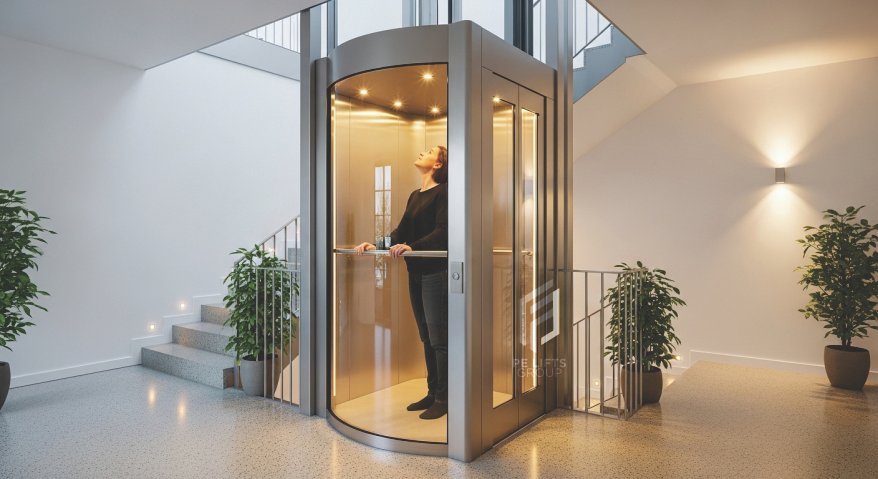
Welcome to the PE Lifts Group comprehensive guide to elevator propulsion. At the heart of every vertical transportation system is the elevator motor, the critical component that translates electrical energy into mechanical movement.
As the overarching authority in vertical mobility, PE Lifts Group leverages specialized divisions to deliver complete solutions. Dove Lifts is central to our discussion on traction elevators, focusing on advanced motors, drives, and VVVF (Variable Voltage Variable Frequency) systems. Meanwhile, PE Lifts Services ensures these complex systems remain reliable through expert maintenance, modernization, and technical audits across West Africa.
This guide breaks down the relationship between the motor, traction system, controller, drive, speed control, and elevator cabin movement in simple English.
1. What is an elevator motor?
An elevator motor is the prime mover or engine of the lift. It provides the mechanical power required to raise and lower the elevator cabin and its passengers. In modern traction elevators, such as those engineered by Dove Lifts, this is typically a highly efficient electric motor designed to operate continuously under heavy, variable loads.
2. How does an elevator motor move the lift?
The motor does not pull the cabin directly. Instead, it connects to a traction system. When the motor rotates, it turns a large grooved wheel called a traction sheave. Steel suspension ropes rest in the grooves of this sheave. On one end of the ropes is the elevator cabin; on the other is a counterweight. As the motor turns the sheave, friction grips the ropes, smoothly moving the cabin up or down the guide rails.
3. What is an elevator drive system?
If the motor is the muscle, the elevator drive system is the brain and nervous system. The drive (often housed within the main controller) regulates the electrical power sent to the motor. It dictates exactly how much power is needed, when to accelerate, how fast to travel, and when to decelerate, ensuring the cabin moves safely and precisely to the correct floor.
4. What are the main elevator drive types?
Historically, the industry has utilized several elevator drive types, including:
- AC (Alternating Current) Drives: Traditional systems, often used in older or lower-speed lifts.
- DC (Direct Current) Drives: Known for excellent speed control but require high maintenance due to mechanical brushes.
- Hydraulic Drives: Used for low-rise buildings, pushing fluid to move a piston rather than using a traditional rotary motor.
- VVVF Drives: The modern standard for traction elevators, offering superior efficiency and control.
5. What is a VVVF elevator motor and drive system?
A VVVF elevator motor paired with a VVVF drive represents the gold standard in modern traction technology. VVVF stands for Variable Voltage Variable Frequency. Instead of supplying a constant electrical frequency, the drive dynamically adjusts both the voltage and the frequency of the electricity sent to the AC motor. This allows for infinitely variable speed control rather than fixed, stepped speeds.
6. How does VVVF control elevator speed and movement?
In an AC motor, speed is directly tied to the frequency of the electrical supply, while torque (pulling power) is tied to the voltage. By using a VVVF elevator motor setup, the drive increases the frequency to make the motor spin faster, while simultaneously adjusting the voltage to maintain the correct magnetic strength. This results in seamless, stepless acceleration and deceleration.
7. How do motors and drives affect ride comfort?
Ride comfort is entirely dependent on how smoothly the drive controls the motor. Older drives cause sudden jerks when starting or stopping. Advanced VVVF systems, like those specified in Dove Lifts traction configurations, allow the elevator to accelerate and decelerate gradually. This eliminates the feeling of weightlessness or heaviness in the cabin, providing a smooth, comfortable ride for passengers.
8. How can drive systems influence energy performance?
Modern drives significantly reduce energy consumption. By matching the exact electrical output to the mechanical load required at any given millisecond, VVVF drives eliminate wasted energy. Furthermore, they allow the motor to operate at peak efficiency across various speeds, unlike older systems that draw maximum power regardless of the actual load.
9. What are regenerative elevator drives?
Regenerative drives take energy efficiency a step further. When an elevator travels down with a heavy load, or up with a light load, the motor acts as a generator. Instead of dissipating this generated electricity as heat, a regenerative drive cleans the power and feeds it back into the building’s electrical grid, reducing overall energy costs.
10. What should building owners consider when selecting an elevator motor and drive?
When choosing an elevator motor and drive system, owners must evaluate building height, expected traffic volume, energy efficiency goals, and lifecycle costs. While hydraulic systems suit low-rise buildings, Dove Lifts’ gearless traction motors with VVVF drives are ideal for mid-to-high-rise structures. Consulting with experts ensures the selected system aligns with both architectural constraints and long-term operational budgets.
Comparison Table: Elevator Motors and Drive Technologies
The following table outlines the verified differences between common elevator configurations.
| Motor Type | Drive Technology | Speed Control | Ride Quality | Energy Considerations | Common Applications | Maintenance Considerations |
|---|---|---|---|---|---|---|
| Geared Traction | AC / VVVF | Good | Smooth | Moderate | Mid-rise commercial & residential | Gearbox oil changes, brake inspections |
| Gearless Traction | VVVF | Excellent | Very Smooth | High Efficiency | High-rise, premium commercial | Low maintenance, no gearbox oil |
| Hydraulic | Hydraulic Valve | Basic | Jerky / Slow | Low Efficiency | Low-rise, freight, limited pit depth | Fluid leaks, pump maintenance, heat |
Qualitative Comparison Chart: Drive System Factors
Note: The data below represents a qualitative industry comparison. It is designed to help stakeholders understand relative differences without relying on invented numerical performance scores.
| Factor | Geared Traction (AC) | Gearless Traction (VVVF) | Hydraulic Systems |
|---|---|---|---|
| Speed Control Precision | Medium | High | Low |
| Ride Comfort | Medium | High | Low |
| Energy Efficiency | Medium | High | Low |
| System Complexity | Medium | High | Medium |
| Maintenance Requirements | Medium | Low | High |
(To visualize this in Microsoft Word: Copy the table above, go to Insert > Chart > Bar Chart, and paste the data to generate a visual comparison of these qualitative factors.)
Frequently Asked Questions (FAQs)
1. What is the most common elevator motor used today? The gearless traction motor paired with a VVVF drive is the most common and highly recommended system for modern commercial and residential buildings due to its efficiency and smooth ride quality.
2. How long do elevator motors last? With proper maintenance, a high-quality traction motor can last 20 to 30 years or more. Regular servicing by professionals, such as those at PE Lifts Services, is critical to maximizing lifespan.
3. What is the difference between geared and gearless motors? Geared motors use a gearbox to reduce the high speed of the motor to a usable speed for the traction sheave. Gearless motors connect directly to the sheave, eliminating the gearbox, which reduces friction, noise, and maintenance.
4. Why is VVVF important for modern elevators? VVVF technology provides stepless speed control, drastically improving ride comfort, reducing mechanical stress on the system, and lowering energy consumption compared to older AC or DC drives.
5. Can old elevator motors be upgraded to VVVF drives? Yes. Through modernization services, PE Lifts Services can often retrofit older elevator systems with new VVVF drives and controllers, improving ride quality and energy efficiency without requiring a full shaft rebuild.
6. Do regenerative drives actually save money? Yes. In buildings with heavy, bidirectional traffic (elevators going up and down frequently with varying loads), regenerative drives can significantly reduce the building's overall electricity bill by returning power to the grid.
7. How often should an elevator motor be serviced? Elevator motors and drives should be inspected and serviced regularly as part of a structured Annual Maintenance Contract (AMC). PE Lifts Services recommends scheduled preventive maintenance to catch wear before it causes breakdowns.
8. What causes elevator motor failure? Common causes include overheating due to poor ventilation, bearing wear from lack of lubrication, electrical surges, and excessive vibration caused by misaligned traction sheaves or worn ropes.
9. Are gearless traction motors better for high-rise buildings? Absolutely. Gearless motors are compact, highly efficient, and capable of achieving the high speeds required for tall buildings, making them the standard choice for high-rise developments.
10. How do I choose the right drive system for my building? The choice depends on building height, traffic patterns, and energy goals. PE Lifts Group and Dove Lifts conduct comprehensive technical audits to recommend the exact motor and drive configuration that fits your architectural and operational needs.
Partner with PE Lifts Group for Your Vertical Mobility Needs
Selecting the right elevator motor and drive system is a critical decision that impacts building value, passenger safety, and long-term operational costs. Whether you are planning a new development, upgrading an aging system, or seeking reliable maintenance, the PE Lifts Group ecosystem has the expertise you need.
Developers, architects, building owners, and facility managers: Contact PE Lifts Group and Dove Lifts today to discuss your elevator motor and drive requirements, or reach out to PE Lifts Services for expert technical audits and modernization solutions across West Africa.