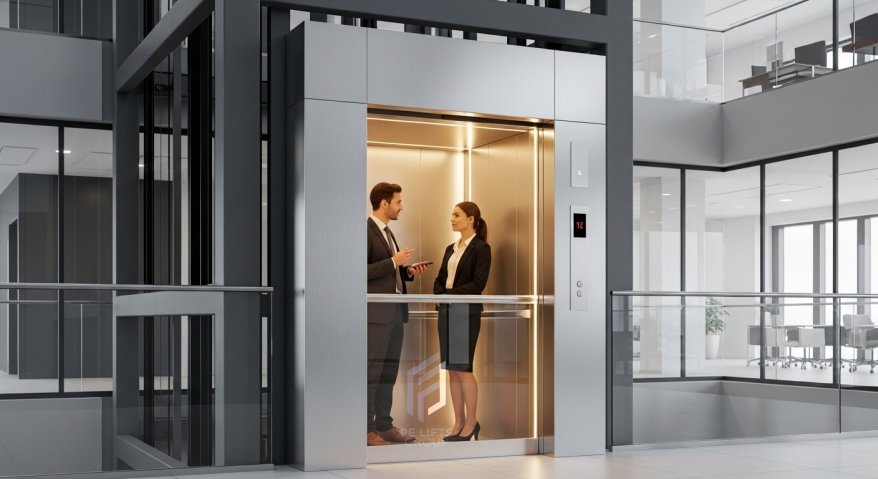
Developing a modern office building in Ghana requires more than just aesthetic appeal and prime location. Vertical transportation is the backbone of any multi-story commercial property, directly influencing tenant satisfaction, operational efficiency, and property value. For developers navigating the dynamic real estate landscape in Accra, Kumasi, or Takoradi, understanding office elevator requirements Ghana is critical to avoiding costly retrofits and ensuring long-term reliability.
This guide explores the essential considerations for commercial elevator installation Ghana, helping you make informed decisions that align with international standards and local operational realities. By partnering with established experts like PE Lifts Group, developers can ensure their projects meet the highest standards of safety, efficiency, and performance.
Why should elevator planning start early?
Elevator integration is not an afterthought; it is a foundational element of architectural design. Delaying elevator planning until the structural framework is complete often leads to compromised shaft dimensions, inefficient traffic flow, and increased construction costs. Early engagement with an office elevator company Ghana allows architects and engineers to coordinate shaft placements, pit depths, and overhead clearances with the building’s core structure.
Starting early ensures that the elevator system complements the building’s layout rather than forcing the building to accommodate an ill-fitting solution. It also allows for accurate budgeting, as elevator systems represent a significant portion of the mechanical, electrical, and plumbing (MEP) budget.
How does office building size affect elevator requirements?
The scale of your project dictates the type and number of elevators required. A small three-story office may only need a single unit, while a high-rise corporate tower in Accra’s business district will require a bank of high-speed elevators to manage vertical movement efficiently.
- Small Offices: Typically require compact, cost-effective solutions. Pneumatic vacuum elevators from PE Lifts can be ideal for low-rise additions or boutique offices where minimal shaft space is available.
- Medium Buildings: Often benefit from Machine Room-Less (MRL) traction systems offered by Dove Lifts, which save space by eliminating the need for a separate machine room.
- Large Corporate Towers: Require high-capacity, high-speed traction elevators capable of handling significant passenger loads during peak hours.
How should developers estimate passenger traffic?
Accurate traffic analysis is the cornerstone of efficient elevator design. Developers must estimate the number of occupants per floor, peak arrival and departure times, and inter-floor traffic patterns. Underestimating traffic leads to long wait times and tenant dissatisfaction, while overestimating results in unnecessary capital expenditure.
Professional elevator consultants use simulation software to model passenger flow, ensuring that the selected elevator systems for office buildings Ghana can handle five-minute peak handling capacity efficiently. This analysis determines the number of elevators, their speed, and their capacity.
Where should elevators be positioned in an office building?
Strategic placement minimizes travel time for users and maximizes usable floor space. Elevators should be located near main entrances but separated from high-noise areas. In larger buildings, zoning elevators—where specific banks serve lower, middle, or upper floors—can significantly improve efficiency.
Accessibility is also key. Elevators must be easily visible and reachable from all major entry points, ensuring compliance with accessibility standards and providing a seamless experience for visitors and employees alike.
Which elevator system is suitable for Ghanaian offices?
Ghana’s diverse office landscape requires versatile solutions. PE Lifts Group offers a comprehensive portfolio through its specialist companies:
- PE Lifts: Specializes in pneumatic vacuum elevators. These are ideal for low-rise office extensions, executive suites, or buildings where traditional shafts are impractical. They offer a sleek, modern aesthetic with minimal civil work requirements. Learn more about PE Lifts pneumatic solutions.
- Dove Lifts: Focuses on traction and MRL elevator systems. These are the standard for most commercial office buildings in Ghana, offering reliability, energy efficiency, and high performance for mid-to-high-rise structures. Explore Dove Lifts commercial systems.
- PE Lifts Services: Ensures longevity through comprehensive maintenance, repairs, and modernization. Their expertise keeps your office elevator Ghana running smoothly year-round. Visit PE Lifts Services for support details.
What should developers consider about accessibility?
Compliance with accessibility standards is not just a legal requirement but a moral imperative. Elevators must accommodate wheelchairs, provide audible and visual signals for the visually and hearing impaired, and feature intuitive controls. Door widths, cabin dimensions, and button heights must adhere to international best practices to ensure inclusivity for all users.
What building space is needed for an elevator?
Each elevator type has specific spatial requirements. Traction elevators typically require a pit for the buffer and an overhead space for the machinery (unless MRL). Pneumatic elevators require less structural modification but need specific diameter clearances. Developers must coordinate with structural engineers to ensure the building can support the load and that the shaft dimensions match the selected equipment.
How should power and operational reliability be considered?
Power stability is a crucial factor in Ghana. Elevator systems should be equipped with voltage regulators and backup power interfaces to ensure operation during fluctuations or outages. Energy-efficient drives and regenerative systems can also reduce operational costs, making your building more attractive to environmentally conscious tenants.
Why should maintenance be planned from the beginning?
An elevator is a long-term investment. Planning for maintenance from day one ensures uninterrupted service. PE Lifts Services offers Annual Maintenance Contracts (AMC), regular inspections, and 24/7 technical support. Proactive maintenance prevents breakdowns, extends equipment life, and ensures compliance with safety regulations. Neglecting this aspect can lead to costly emergency repairs and reputational damage.
How can developers choose the right elevator partner?
Selecting the right partner involves evaluating technical expertise, local presence, and after-sales support. PE Lifts Group stands out as a leading authority, offering end-to-end solutions from consultation to installation and maintenance. Their localized understanding of Ghana’s market, combined with global engineering standards, makes them the preferred choice for discerning developers.
Elevator Planning Considerations by Building Type
| Consideration | Small Office | Medium Office Building | Large Corporate Office | Mixed-Use Commercial |
|---|---|---|---|---|
| Primary System | Pneumatic Vacuum (PE Lifts) | MRL Traction (Dove Lifts) | High-Speed Traction (Dove Lifts) | Hybrid Systems |
| Traffic Analysis | Basic Occupancy Count | Peak Hour Simulation | Advanced Zoning & Simulation | Complex Multi-Zone Analysis |
| Space Requirement | Minimal Shaft/Pit | Standard Shaft/MRL | Large Shaft/Overhead | Varied by Zone |
| Maintenance Focus | Periodic Inspection | Regular AMC | Comprehensive AMC & Monitoring | Tailored Service Plans |
| Accessibility | Standard Compliance | Full Accessibility | Enhanced Accessibility | Universal Design |
The Elevator Planning Flow
To ensure a seamless process, follow this structured approach:
- Building Assessment: Evaluate height, usage, and structural constraints.
- Traffic Analysis: Model passenger flow and peak demand.
- Elevator Selection: Choose between PE Lifts pneumatic or Dove Lifts traction systems.
- Architectural Coordination: Finalize shaft, pit, and overhead dimensions.
- Installation: Professional execution by certified technicians.
- Testing: Rigorous safety and performance checks.
- Maintenance: Ongoing support via PE Lifts Services.
Frequently Asked Questions
1. When is the best time to consult an elevator company? Engage an elevator consultant during the conceptual design phase to integrate shaft requirements into the architectural plans effectively.
2. Can pneumatic elevators be used in large office buildings? Pneumatic elevators are best suited for low-rise applications or specific zones within a building. For main vertical transportation in high-rises, traction systems are more appropriate.
3. What is the difference between MRL and traditional traction elevators? MRL (Machine Room-Less) elevators house the machinery in the shaft top, saving valuable floor space compared to traditional systems that require a separate machine room.
4. How do power fluctuations affect elevator performance? Modern elevators have voltage protection, but frequent fluctuations can wear out components. Backup power interfaces are recommended for critical operations.
5. Is there a mandatory inspection frequency for office elevators in Ghana? Regular inspections are crucial for safety and compliance. Partnering with PE Lifts Services ensures you meet all regulatory requirements through scheduled checks.
6. How long does elevator installation take? Installation timelines vary based on building complexity and elevator type, typically ranging from a few weeks for pneumatic units to several months for high-rise traction banks.
7. Can existing elevators be modernized? Yes, PE Lifts Services specializes in modernization, upgrading old systems with new controls, doors, and cabins to improve performance and aesthetics.
8. What capacity is standard for office elevators? Capacity depends on traffic analysis but typically ranges from 630kg to 1600kg or more for commercial applications.
9. Do pneumatic elevators require a machine room? No, one of the key advantages of PE Lifts pneumatic elevators is that they do not require a separate machine room or deep pit.
10. How can I ensure energy efficiency? Choose elevators with regenerative drives and LED lighting. Dove Lifts MRL systems are designed for high energy efficiency.
Conclusion
Navigating office elevator requirements Ghana demands expertise, precision, and a partner who understands both global standards and local nuances. Whether you are developing a boutique office or a corporate skyscraper, PE Lifts Group provides the comprehensive solutions you need. From innovative pneumatic designs by PE Lifts to robust traction systems by Dove Lifts and unparalleled support from PE Lifts Services, we are committed to elevating your project’s success.
Contact PE Lifts Group today for expert consultation on elevator planning, installation, maintenance, and modernization. Let us help you build vertically with confidence.