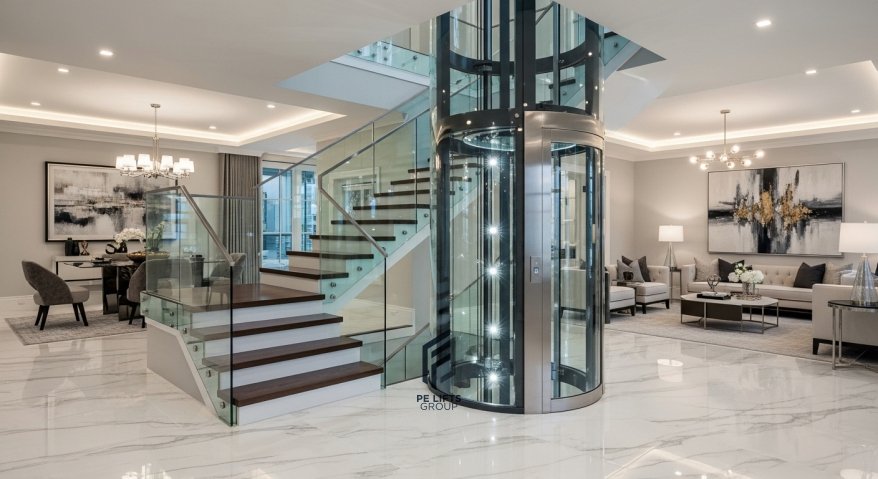
In the hospitality industry, the guest experience begins the moment they step into the lobby. Vertical transportation plays a massive role in shaping this first impression. As the leading provider of hotel elevator systems in West Africa, PE Lifts Group delivers comprehensive, tailored solutions for the unique demands of the hospitality sector.
Our integrated approach ensures every aspect of vertical transportation is covered. Dove Lifts provides robust traction and Machine Room-Less (MRL) systems; PE Lifts offers innovative pneumatic vacuum solutions for unique architectural needs; and PE Lifts Services delivers lifecycle maintenance, modernization, and 24/7 technical support.
Here is your comprehensive guide to selecting, installing, and maintaining the perfect vertical transportation solution for your property.
1. What are hotel elevator systems?
Hotel elevator systems are specialized vertical transport solutions engineered to balance high passenger capacity with premium comfort. Unlike standard commercial lifts, they must operate quietly, handle diverse and unpredictable traffic flows, and seamlessly complement luxury interiors. They are designed to move guests efficiently while remaining virtually unnoticeable in terms of noise and vibration.
2. What makes the best elevator for hotels?
The best elevator for hotels prioritizes reliability, smooth ride quality, and aesthetic integration. Guests expect a seamless experience. Dove Lifts specializes in traction and MRL systems that offer the quiet operation, precise leveling, and energy efficiency required for high-end hospitality. A top-tier system minimizes waiting times while maximizing passenger comfort.
3. How should hotels separate guest and service movement?
Separation is critical for maintaining a luxury atmosphere. Guests expect an uninterrupted, premium experience. Service elevators must be strictly dedicated to staff, luggage, food delivery, laundry, and waste removal. This prevents guests from encountering back-of-house operations, ensuring the hotel’s premium ambiance is preserved in all public and guest areas.
4. How do hotel traffic patterns affect elevator selection?
Hotels experience distinct traffic peaks: morning check-outs, evening check-ins, and random interfloor traffic during banquets or conferences. Elevator controllers must be programmed to handle these specific patterns. Modern systems prioritize lobby calls during peak hours and optimize interfloor travel during events, ensuring efficient movement regardless of the time of day.
5. What elevator capacity and speed should hotels consider?
Standard hotel lift requirements dictate that guest elevators typically accommodate 10 to 16 passengers to balance space and efficiency. Speed is determined by building height. Low-rise hotels may require speeds of 1.0 m/s, while mid-to-high-rise properties need 1.6 m/s to 2.5 m/s to ensure acceptable waiting times and smooth transit.
6. Why are ride comfort, noise and door operation important for guests?
The elevator cabin is an extension of the guest room. Jerky starts, loud motor noise, or slow doors create an immediate negative impression. Modern Variable Voltage Variable Frequency (VVVF) drives ensure smooth acceleration and deceleration. High-quality door operators guarantee quiet, rapid entry and exit, which is crucial for maintaining a peaceful environment.
7. How do aesthetics and cabin design affect the guest experience?
Visual appeal matters deeply in hospitality. The cabin should reflect the property's design language. For boutique hotels, luxury suites, or unique architectural spaces, PE Lifts offers stunning pneumatic vacuum elevator solutions. These transparent, cylindrical lifts provide a futuristic aesthetic that serves as a visual centerpiece, enhancing the overall design narrative.
8. What are the key hotel lift requirements during planning and installation?
Proper hotel elevator installation Africa requires early coordination between developers, architects, and elevator engineers. Key requirements include adequate shaft dimensions, correct pit depth, sufficient overhead clearance, and dedicated, stable power supplies. Addressing these technical requirements during the initial design phase prevents costly structural modifications and delays later.
9. How can hotels reduce elevator downtime?
Elevator downtime directly impacts guest satisfaction and operational efficiency, especially for service lifts. The most effective way to reduce downtime is through proactive, scheduled preventive maintenance rather than reactive repairs. Regular inspections identify worn components before they fail, ensuring continuous, reliable operation.
10. How should hotels plan elevator maintenance and long term service?
Hotels should partner with specialized technical teams like PE Lifts Services to implement comprehensive Annual Maintenance Contracts (AMCs). This ensures 24/7 emergency support, regular safety inspections, and access to genuine spare parts. A structured AMC maximizes the system's lifespan, ensures compliance with safety codes, and guarantees maximum uptime.
Comparison Table: Hotel Elevator Applications
| Elevator Type | Purpose | Traffic Type | Design Priorities | Capacity Considerations | Maintenance Needs |
|---|---|---|---|---|---|
| Guest Elevators | Transporting guests and light luggage. | Up-peak, down-peak, and random interfloor. | Quiet operation, smooth ride, premium cabin aesthetics. | 10 to 16 passengers; optimized for comfort. | High-frequency preventive maintenance; daily cleaning checks. |
| Service Elevators | Staff, heavy luggage, food, and waste. | Heavy, continuous, and unpredictable. | Durability, large capacity, easy-to-clean interiors, robust doors. | 16 to 25+ passengers; optimized for heavy loads. | Intensive maintenance; frequent door and mechanical checks due to heavy use. |
| Pneumatic / Vacuum | Boutique aesthetics, low-rise luxury access. | Low-volume, random interfloor. | Visual impact, transparent design, minimal shaft footprint. | 2 to 4 passengers; optimized for space-saving. | Specialized maintenance for vacuum seals and pneumatic drives. |
Bar Chart: Hotel Elevator Priorities
(Note for Editor: Use the data below to generate a simple clustered bar chart in your CMS or Word document.)
Chart Title: Key Priorities in Hotel Elevator Selection (Scored 1-10)
- Guest Experience: 10
- Reliability & Uptime: 9
- Traffic Handling Capacity: 8
- Aesthetics & Cabin Design: 8
- Accessibility & Safety: 9
- Maintenance Efficiency: 7
10 Frequently Asked Questions (FAQs)
1. What is the standard waiting time for hotel elevators? Industry standards recommend an average waiting time of 25 to 30 seconds during peak periods for guest elevators. Service elevators should be sized to prevent guests from waiting alongside staff.
2. Do I need a machine room for my hotel elevators? Not necessarily. Machine Room-Less (MRL) elevators, provided by Dove Lifts, house the motor within the shaft itself, saving valuable real estate space that can be used for revenue-generating rooms.
3. How often should hotel elevators be serviced? Guest elevators should be serviced at least once a month, while heavily used service elevators may require bi-weekly or even weekly preventive maintenance visits to ensure zero downtime.
4. Can pneumatic vacuum elevators be used in large hotels? Pneumatic elevators from PE Lifts are ideal for boutique hotels, luxury villas, or low-rise extensions where space is limited and visual impact is a priority. They are not designed for high-capacity, high-rise main lobby traffic.
5. What happens if a guest gets trapped in the elevator? With PE Lifts Services’ 24/7 emergency support, response times are guaranteed within 2 hours in major cities. Modern systems also feature automated rescue devices (ARD) that safely move the cabin to the nearest floor during a power outage.
6. How do I choose between traction and hydraulic elevators? Traction elevators (especially MRL) are the best choice for mid-to-high-rise hotels due to their speed, energy efficiency, and smooth ride. Hydraulic elevators are typically reserved for very low-rise buildings or specific freight applications.
7. What is the most critical hotel lift requirement during construction? Ensuring the shaft is perfectly plumb (vertically aligned) and that the correct pit depth and overhead clearances are built exactly to the manufacturer's specifications.
8. How can modernization improve an older hotel's elevator system? Modernization upgrades the controller, door operators, and drive systems. This reduces waiting times, lowers energy consumption, improves ride comfort, and updates the cabin aesthetics without replacing the entire shaft infrastructure.
9. Do you provide genuine spare parts for all elevator brands? Yes. PE Lifts Services supplies and installs genuine OEM-quality spare parts for all major elevator brands, including OTIS, KONE, Schindler, TK Elevator, and Mitsubishi.
10. How do I get a quote for a new hotel elevator project? You can request a tailored consultation, technical inspection, or AMC quote by contacting the PE Lifts Group technical team directly through our website or by calling our support line.
Optimize Your Hotel’s Vertical Transportation
Choosing the right hotel elevator systems is a critical decision that impacts guest satisfaction, operational efficiency, and your property's bottom line. Whether you are developing a new luxury resort, upgrading an existing high-rise, or seeking reliable maintenance for your current fleet, PE Lifts Group has the expertise to deliver.
Don't let outdated or poorly maintained elevators compromise your guest experience. Contact the experts at PE Lifts Group today to discuss your specific hotel lift requirements and discover how our integrated solutions can elevate your property.