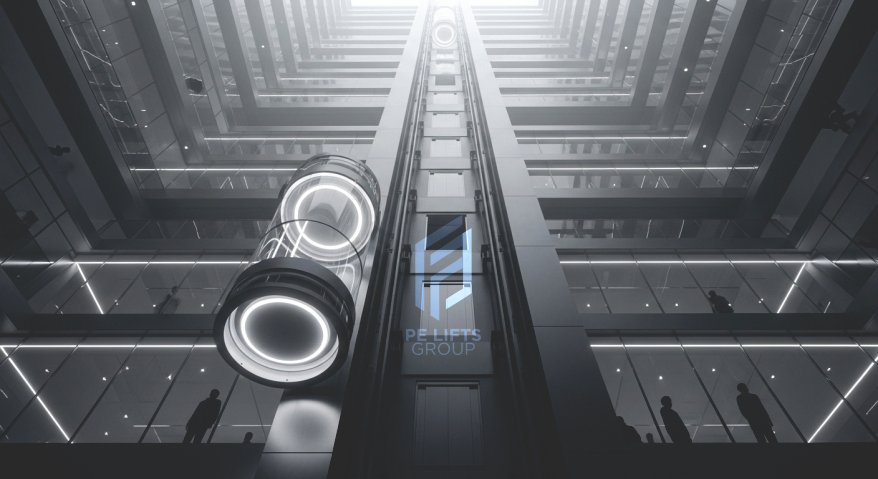
A machine room less elevator is a modern vertical transportation solution that eliminates the need for a separate, dedicated machine room. Instead, the driving machinery is compactly integrated directly into the elevator shaft. As building designs evolve across the continent, MRL technology has become a crucial option for maximizing usable space without compromising performance. At PE Lifts Group, we understand that every building has unique requirements. That is why we provide tailored elevator solutions, ensuring developers and property owners get the right vertical mobility system for their specific architectural and operational needs.
What Is a Machine Room Less Elevator?
In simple terms, a machine room less elevator is a traction elevator system designed to operate without a traditional, separate machine room at the top or bottom of the shaft. Historically, elevators required a dedicated room to house heavy motors, control panels, and drive systems. With an MRL elevator, these components are miniaturized and mounted directly within the hoistway (the elevator shaft) or at the top of the shaft. This innovative design frees up valuable square footage, making it a highly sought-after choice for modern construction projects where space is at a premium.
How Does a Machine Room Less Elevator Work?
The operation of an MRL elevator relies on an advanced, compact traction system. Here is the basic breakdown:
- Motor and Drive: A small, highly efficient permanent magnet synchronous motor (PMSM) is mounted inside the shaft.
- Ropes and Counterweight: Steel ropes connect the elevator car to a counterweight, balancing the load to reduce the energy needed for movement.
- Controller: A compact control panel, usually mounted inside the shaft or adjacent to the top landing, manages the elevator’s movement, speed, and door operations.
- Elevator Car and Doors: The car moves smoothly along guide rails, while automated doors ensure safe passenger entry and exit.
By keeping all essential components within the shaft, the system operates quietly and efficiently without the spatial footprint of a traditional machine room.
What Are the Main Benefits of MRL Elevators?
Choosing an MRL elevator offers several distinct advantages for modern buildings:
- Space Efficiency: By eliminating the dedicated machine room, developers gain valuable rentable or usable floor space.
- Building Design Flexibility: Architects can design more efficient floor plans without accommodating a bulky machine room.
- Efficient Equipment Arrangement: Components are neatly organized within the hoistway, simplifying the structural layout.
- Modern Technology: MRL systems utilize advanced gearless traction motors, promoting energy-efficient operation.
- Passenger Comfort: The gearless technology ensures a smooth, quiet, and vibration-free ride, enhancing the user experience.
- Suitability for Many Commercial Applications: From mid-rise offices to boutique hotels, MRL elevators adapt seamlessly to diverse environments.
(Note: While energy efficiency is a hallmark of MRL technology, exact savings depend on usage patterns, building design, and specific equipment configurations.)
Where Are Machine Room Less Elevators Used?
MRL elevators are highly versatile and are commonly installed in:
- Office buildings
- Hotels and hospitality venues
- Shopping centres and retail spaces
- Residential developments and apartment blocks
- Hospitals and healthcare facilities
- Mixed-use buildings
- General commercial properties
However, suitability is not universal. The decision to install an MRL elevator depends on a professional assessment of the building design, required capacity, travel height, expected traffic patterns, and specific equipment specifications.
What Are the Limitations of MRL Elevators?
While highly advantageous, MRL elevators do have specific limitations to consider:
- Maintenance Access: Because equipment is inside the shaft, technicians require specialized training and equipment to safely access components for servicing.
- Building Requirements: The shaft must be structurally sound to support the mounted machinery and withstand operational vibrations.
- Capacity and Travel Conditions: MRL systems are generally optimized for low to mid-rise buildings (typically up to 30 floors). For ultra-high-rise or heavy-freight applications, traditional machine-room elevators or hydraulic systems might be more appropriate.
- Heat Management: Equipment inside the shaft can generate heat, requiring adequate ventilation within the hoistway to prevent overheating.
How Does a Machine Room Less Elevator Compare With a Traditional Elevator?
| Feature | Machine Room Less (MRL) Elevator | Traditional Elevator |
|---|---|---|
| Space Requirements | Minimal; no separate machine room needed. | High; requires a dedicated machine room. |
| Machine Room | Integrated into the elevator shaft. | Separate room at the top or bottom of the shaft. |
| Installation | Faster and less structurally invasive. | More complex due to machine room construction. |
| Building Design | Highly flexible; maximizes usable floor area. | Less flexible; requires dedicated structural space. |
| Maintenance Access | Requires specialized shaft access and training. | Easier access in a dedicated, spacious room. |
| Applications | Ideal for low to mid-rise commercial and residential. | Suitable for all heights, including high-rise and heavy freight. |
| Technology | Advanced gearless traction, compact controllers. | Traditional geared or gearless traction, larger panels. |
| Long Term Considerations | Energy efficient, but component replacement can be shaft-bound. | Easier component replacement, but higher baseline energy use. |
Why Is Dove Lifts Important to the PE Lifts Group Elevator Portfolio?
PE Lifts Group operates as a comprehensive vertical mobility conglomerate, and each subsidiary plays a distinct, strategic role. Dove Lifts is the Group’s specialized division focused on high-performance traction and machine room less elevator solutions for mid to high-rise buildings across West Africa. When a project requires robust, scalable MRL technology, Dove Lifts provides the engineering expertise, premium aesthetics, and reliable mechanical performance needed for success.
Conversely, PE Lifts specializes in innovative pneumatic vacuum elevator systems, ideal for residential and light commercial applications where zero civil works and minimal structural requirements are paramount.
To ensure these systems operate flawlessly over their entire lifecycle, PE Lifts Services provides dedicated after-market support. This includes Annual Maintenance Contracts (AMC), emergency repairs, modernization projects, technical inspections, and genuine spare parts supply for all elevator brands.
How Should You Choose an MRL Elevator for Your Building?
Selecting the right MRL elevator requires careful planning. Consider the following factors:
- Capacity and Speed: Determine the maximum passenger load and the required travel speed based on building height.
- Number of Floors and Traffic: Analyze peak traffic times to ensure the elevator can handle the demand without excessive wait times.
- Shaft Conditions: Verify that the existing or planned shaft can accommodate the MRL equipment and provide safe maintenance access.
- Power Requirements: Ensure the building’s electrical infrastructure can support the elevator’s drive system.
- Safety and Compliance: Confirm the system meets international standards (such as EN 81) and local building codes.
- Installation Support and Maintenance: Partner with a provider who offers certified machine room less elevator installation, reliable spare parts, and long-term service agreements to protect your investment.
Why Choose PE Lifts Group for Elevator Solutions?
When you partner with PE Lifts Group, you gain access to a unified ecosystem of elevator expertise. Whether your project demands the space-saving innovation of an MRL system from Dove Lifts, the architectural elegance of a pneumatic vacuum elevator from PE Lifts, or the comprehensive lifecycle support of PE Lifts Services, our Group structure ensures seamless, end-to-end delivery. As a leading elevator company Africa trusts, we combine international engineering standards with deep regional expertise to deliver safe, reliable, and future-ready vertical mobility solutions.
Conclusion
Machine room less elevators represent a smart, space-efficient evolution in vertical transportation, offering modern technology, passenger comfort, and design flexibility. However, their successful implementation depends on a thorough understanding of your building’s specific capacity, travel, and maintenance requirements. Before selecting an elevator system, always seek a professional engineering assessment.
Are you planning a new development or upgrading an existing property? Contact PE Lifts Group or Dove Lifts today for expert MRL elevator consultation, equipment selection, professional installation, maintenance, modernization, and long-term technical support across West Africa.
Frequently Asked Questions (FAQs)
1. What is a machine room less elevator?
A machine room less (MRL) elevator is a traction elevator system where the motor, controller, and drive machinery are compactly integrated directly into the elevator shaft, eliminating the need for a separate, dedicated machine room.
2. How does an MRL elevator work?
It uses a compact, gearless traction motor mounted in the hoistway. Steel ropes connect the elevator car to a counterweight, while a microprocessor controller manages smooth, energy-efficient movement and door operations.
3. What are the benefits of an MRL elevator?
Key machine room less elevator benefits include maximized usable building space, greater architectural design flexibility, energy-efficient modern technology, quieter operation, and enhanced passenger comfort.
4. Does an MRL elevator need a machine room?
No. The defining feature of an MRL elevator is that all essential machinery is housed within the elevator shaft, freeing up the square footage that a traditional machine room would occupy.
5. Where are MRL elevators used?
They are commonly used in office buildings, hotels, shopping centres, residential developments, hospitals, and mixed-use commercial properties, particularly in low to mid-rise structures.
6. Are MRL elevators suitable for commercial buildings?
Yes, an MRL elevator for commercial buildings is highly suitable, provided the building’s height, traffic patterns, and capacity requirements align with the system’s technical specifications.
7. How much space does an MRL elevator require?
It requires only the space of the elevator shaft itself. By removing the need for a separate machine room, it significantly improves the overall space efficiency of the building.
8. How do MRL elevators compare with traditional elevators?
MRL elevators save space and energy with compact, in-shaft machinery, making them ideal for mid-rise buildings. Traditional elevators require a separate machine room but may be better suited for very high-rise or heavy-freight applications.