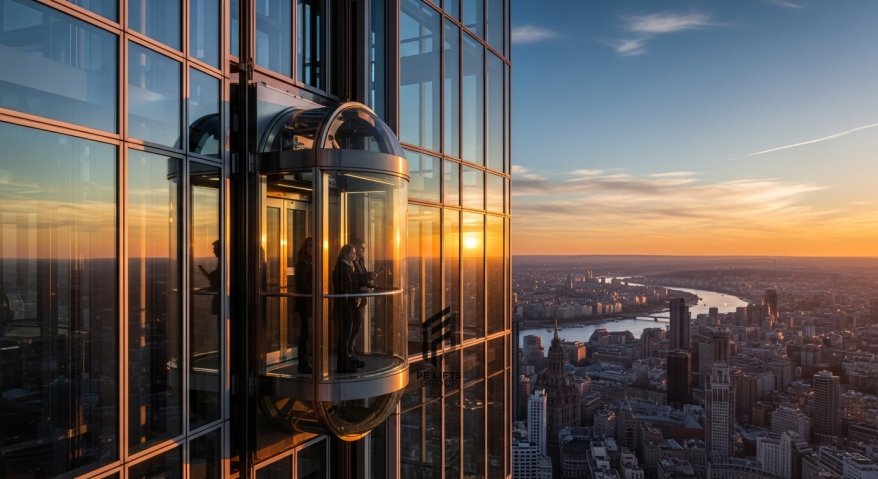
In modern architectural design, elevator planning for architects has become a critical discipline that shapes building functionality, user experience, and long-term property value. Whether you're designing a luxury residential tower, a bustling commercial complex, or a healthcare facility in Africa, integrating vertical transportation systems from the earliest design stages is no longer optional—it's essential.
PE Lifts Group stands as West Africa's most trusted elevator planning partner, offering comprehensive solutions through our specialized subsidiaries: PE Lifts (pneumatic vacuum elevators), Dove Lifts (traction and MRL systems), and PE Lifts Services (maintenance and modernization). Together, we provide architects, developers, and project managers with end-to-end elevator planning, design consultation, installation, and lifecycle support.
Why Should Architects Plan Elevator Systems Early?
Building Function
Early elevator planning ensures that vertical transportation aligns with your building's core purpose. A hospital requires wide-door hospital elevators capable of transporting beds and medical equipment, while a luxury residential development might benefit from the aesthetic appeal of vacuum elevators that require no machine room or pit. PE Lifts Group's engineering team works alongside architects to match elevator specifications with building function, preventing costly redesigns and ensuring optimal performance from day one.
Passenger Flow
Traffic analysis is fundamental to elevator design. Understanding peak usage periods, passenger volume, and destination patterns allows architects to determine the right number of elevator cars, their capacity, and speed. Dove Lifts specializes in traffic flow optimization for commercial buildings, ensuring that office workers, hotel guests, or shopping mall visitors experience minimal wait times even during rush hours.
Space Optimization
Elevator shafts, machine rooms, and pits consume valuable building footprint. Machine-room-less (MRL) traction elevators from Dove Lifts maximize usable space by eliminating the need for separate equipment rooms. For retrofit projects or space-constrained designs, PE Lifts' pneumatic vacuum elevators require zero civil works—no shaft, no pit, no machine room—making them ideal for existing structures where traditional elevators would be impossible.
Future Expansion
Buildings evolve, and so do their vertical transportation needs. Forward-thinking elevator planning for architects includes provisions for future modernization, additional shafts, or capacity upgrades. PE Lifts Services specializes in modernization projects, ensuring that today's elevator installations can be upgraded with new controls, drives, and safety features without major structural modifications.
How Can Elevator Design Be Integrated Into Building Plans?
Shaft and Core Design
Elevator shaft dimensions must accommodate not just the cab, but also counterweights, guide rails, and safety clearances. Working with PE Lifts Group from the schematic design phase ensures that shaft layouts are optimized for your selected elevator type. Our BIM-compatible CAD models allow seamless integration into your architectural drawings, preventing clashes with structural elements, MEP systems, or fire-rated assemblies.
Structural Coordination
Elevator systems impose specific load requirements on building structures. Traction elevators require overhead support for machinery, while hydraulic systems need pit reinforcement. Dove Lifts' engineering team provides detailed load calculations and structural coordination documents, ensuring that your building's framework can support the elevator system throughout its operational life.
Accessibility Planning
Compliance with accessibility standards is non-negotiable. Elevator cab dimensions, door widths, control panel heights, and tactile signage must meet local building codes and international standards like EN 81. PE Lifts Group ensures that every elevator installation—whether a traction system in a high-rise or a vacuum elevator in a private residence—meets or exceeds accessibility requirements, creating inclusive spaces for all users.
Mechanical and Electrical Coordination
Elevators require dedicated power supplies, ventilation, and sometimes cooling systems. Early coordination with MEP consultants prevents conflicts and ensures that electrical rooms, power feeds, and emergency backup systems are properly sized. PE Lifts Services provides technical specifications for all elevator types, simplifying coordination with your building services team.
How Should Architects Choose the Right Elevator?
Traction Elevators
Traction elevators are the gold standard for mid-rise and high-rise buildings. Using steel ropes and counterweights, they offer superior speed (up to 4.0 m/s), energy efficiency, and smooth ride quality. Dove Lifts specializes in traction elevator systems for commercial towers, hotels, and mixed-use developments across West Africa, delivering reliable performance for buildings up to 60 floors.
Vacuum Elevators
Pneumatic vacuum elevators represent the pinnacle of residential elevator innovation. Using air pressure differences to move the cabin, they require no shaft, no machine room, and no pit. PE Lifts offers cutting-edge vacuum elevator systems that install in just 48 hours with zero civil works, making them perfect for luxury homes, heritage buildings, and space-constrained renovations.
Passenger Elevators
Passenger elevators prioritize comfort, speed, and aesthetics. From sleek panoramic glass cabs in shopping malls to destination-controlled systems in office towers, passenger elevators shape user experience. PE Lifts Group offers extensive customization options for cab interiors, lighting, and finishes, allowing architects to create vertical transportation that complements their design vision.
Service Elevators
Service or freight elevators handle heavy loads, bulky items, and high-traffic goods movement. Hospitals need service elevators for equipment transport, hotels require them for luggage and supplies, and residential buildings use them for furniture delivery. Dove Lifts' heavy-duty freight elevators support capacities up to 5,000 kg with reinforced cabins and industrial-grade components.
Capacity and Speed Requirements
Selecting the right capacity and speed is crucial for passenger satisfaction and operational efficiency. A 20-storey office tower needs faster elevators (2.5-4.0 m/s) with higher capacity (1,600-2,000 kg), while a 3-storey residential building can operate efficiently with slower speeds (0.5-1.0 m/s) and moderate capacity (450-630 kg). PE Lifts Group's engineering consultants perform traffic analysis to recommend optimal specifications for your specific project.
What Are the Best Practices for Elevator Planning?
Engage Elevator Specialists Early
Don't wait until construction documents to think about elevators. Engage PE Lifts Group during conceptual design to explore elevator options, understand spatial requirements, and budget accurately. Early collaboration prevents design conflicts, reduces change orders, and ensures that elevator systems enhance rather than compromise your architectural vision.
Plan for Maintenance Access
Elevators require regular maintenance, inspections, and occasional repairs. Ensure that machine rooms (if applicable), control panels, and pit access points are easily reachable for technicians. PE Lifts Services emphasizes maintainability in every installation, providing 24/7 emergency support and preventive maintenance programs that extend equipment life and minimize downtime.
Prioritize Safety and Accessibility
Safety is paramount in elevator design. Multi-layer safety systems including overspeed governors, door sensors, emergency braking, and backup power are standard in PE Lifts Group installations. Accessibility features like braille controls, audio announcements, and adequate cab dimensions ensure that elevators serve all building users, regardless of ability.
Design for Energy Efficiency
Modern elevators incorporate regenerative drives that capture energy during descent and feed it back into the building's electrical system, reducing power consumption by up to 35%. LED lighting, standby modes, and smart destination control systems further enhance efficiency. Dove Lifts' traction elevators feature VVVF (Variable Voltage Variable Frequency) drives that optimize energy use while delivering smooth, quiet operation.
Consider Future Modernization
Elevator technology evolves rapidly. Design shafts and infrastructure with future upgrades in mind. PE Lifts Services specializes in modernization projects, replacing outdated controls, drives, and cabin interiors while reusing existing shafts and structures. This approach extends elevator lifespan by 15-20 years at a fraction of the cost of full replacement.
How Do PE Lifts, Dove Lifts, and PE Lifts Services Support Architects?
Design Consultation
PE Lifts Group provides comprehensive design consultation services, from initial feasibility studies to detailed technical specifications. Our engineers collaborate with your architectural team to select the right elevator type, optimize shaft layouts, and ensure code compliance. We provide BIM models, CAD drawings, and load calculations that integrate seamlessly into your design workflow.
Equipment Selection
With three specialized companies under one umbrella, PE Lifts Group offers unmatched equipment diversity. Need a sleek vacuum elevator for a luxury penthouse? PE Lifts delivers. Planning a 30-storey commercial tower? Dove Lifts' traction systems are engineered for that scale. Managing an existing building portfolio? PE Lifts Services maintains all major elevator brands. This integrated approach gives architects a single point of contact for all vertical transportation needs.
Professional Installation
Installation quality determines long-term elevator performance. Dove Lifts' certified installation teams follow rigorous protocols, from site preparation and equipment delivery to final commissioning and safety testing. We manage every phase with precision, coordinating with general contractors to ensure that elevator installation stays on schedule and within budget.
Lifecycle Maintenance
An elevator is only as good as its maintenance. PE Lifts Services offers comprehensive Annual Maintenance Contracts (AMCs) that include preventive maintenance visits, safety inspections, 24/7 emergency response, and genuine OEM spare parts. Our maintenance programs are tailored to building usage intensity, ensuring peak performance whether it's a low-traffic residential building or a high-volume shopping mall.
Why Do Architects Choose PE Lifts Group?
Architects across Africa trust PE Lifts Group for elevator planning because we combine technical excellence with deep regional expertise. Our track record speaks for itself: 200+ elevators installed, 5+ countries served, 98% client satisfaction, and 98% system uptime. But beyond the numbers, architects value our collaborative approach, responsiveness, and commitment to bringing their designs to life without compromise.
PE Lifts Group understands the unique challenges of building in Africa—from power reliability concerns to climate considerations and local code requirements. Our elevator systems are engineered to perform in West African conditions, with robust components, backup power options, and climate-appropriate finishes. We don't just supply elevators; we deliver peace of mind.
Elevator Type Recommendations by Building Category
| Building Type | Recommended Elevator | Key Features | Best For |
|---|---|---|---|
| Office Buildings | Traction MRL Elevators | Speed: 2.5-4.0 m/s Capacity: 1,000-2,000 kg | High traffic, energy efficiency |
| Hotels | Traction Passenger Elevators | Smooth ride, aesthetic cabs Capacity: 630-1,600 kg | Guest comfort, luggage transport |
| Hospitals | Hospital Service Elevators | Wide doors Capacity: 1,600-2,500 kg | Bed transport, medical equipment |
| Shopping Malls | Traction + Escalators | High capacity Speed: 1.5-2.5 m/s | Heavy foot traffic, visibility |
| Residential | Vacuum or Traction Elevators | Space-saving, quiet operation | Luxury homes, mid-rise apartments |
| Mixed-Use | Combination Systems | Zoned elevators Destination control | Multiple user types, efficiency |