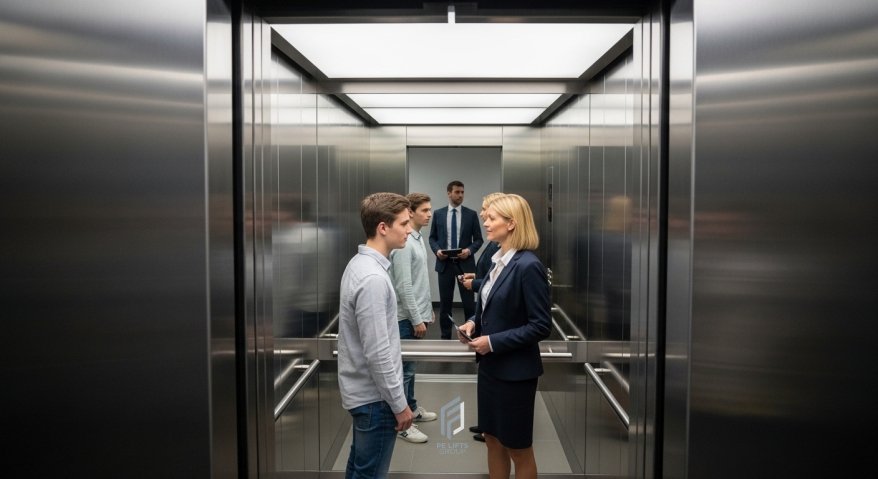
The skyline of Nigeria’s major cities is changing rapidly, with more high-rise residential towers, office complexes, and mixed-use developments rising in Lagos, Abuja, and Port Harcourt. For property developers, architects, and facility managers, selecting the right vertical transportation system is one of the most critical engineering decisions in a project. A high rise elevator Nigeria solution must do more than just move people; it must ensure efficiency, safety, and comfort for hundreds or thousands of daily users. Choosing the wrong system can lead to long wait times, excessive energy costs, and frequent maintenance issues. This guide explores the technical considerations, system types, and planning strategies essential for successful high-rise elevator installation.
Why Do High-Rise Buildings Require Specialised Elevator Planning?
High-rise buildings present unique challenges that low-rise structures do not. The primary issue is vertical transportation efficiency. In a 20-storey building, passengers expect to reach their destination quickly, regardless of the time of day. Without specialised planning, elevators can become bottlenecks, reducing the building's attractiveness to tenants and residents.
Specialised planning involves analyzing passenger traffic patterns, determining optimal elevator speeds, and grouping elevators to work together. It also requires careful coordination with structural engineers to ensure the building can support the weight and dynamic forces of high-speed machinery. Furthermore, safety regulations for high-rise structures are stringent, requiring robust emergency communication systems and backup power arrangements. Ignoring these factors can compromise both user experience and regulatory compliance.
How Do Building Height and Number of Floors Influence Elevator Selection?
The height of a building and the number of floors directly dictate the type of elevator technology required. As travel distance increases, the limitations of certain systems become apparent. For instance, hydraulic elevators, which rely on fluid pressure to lift the car, are generally suitable for low to mid-rise buildings up to six or seven floors. Beyond this height, they become inefficient and slow.
For taller structures, traction elevator systems are the standard. These systems use ropes and counterweights, allowing for greater travel heights and higher speeds. The total travel distance determines the required rope length, motor power, and shaft dimensions. Architects must account for these requirements early in the design phase to ensure adequate space for the shaft, machine room (if applicable), and pit depth. Misjudging these dimensions can lead to costly structural modifications later in the construction process.
What Is the Difference Between Traction, MRL, and Hydraulic Elevator Systems?
Understanding the core technologies is vital for making an informed choice.
Hydraulic Elevators: These use a piston and fluid to move the car. They are smooth and quiet but slow and energy-intensive for tall buildings. They are rarely used for high-rise applications due to speed limitations and the need for large underground machinery spaces.
Traction Elevators: These use steel ropes or belts and a counterweight system driven by an electric motor. They are highly efficient for medium to high-rise buildings. Traction systems can achieve high speeds and are capable of serving many floors. They are the most common choice for high rise elevator systems Nigeria projects.
Machine Room Less (MRL) Elevators: A subset of traction technology, MRL elevators house the motor and controller within the shaft itself, eliminating the need for a separate machine room. This saves valuable floor space. However, their application in very high-rise buildings may be limited by motor size and heat dissipation requirements. Dove Lifts offers advanced traction and MRL solutions suitable for various commercial and residential heights.
Comparison of Elevator Systems for High-Rise Applications
| System Type | Typical Application | Advantages | Selection Considerations |
|---|---|---|---|
| Hydraulic | Low-rise (up to 6-7 floors) | Smooth ride, lower initial cost | Slow speed, high energy use, not for high-rise |
| Traction (Geared/Gearless) | Mid to High-rise | High speed, energy efficient, long travel | Requires machine room (unless MRL), complex installation |
| Machine Room Less (MRL) | Mid-rise to some High-rise | Space-saving, energy efficient | Limited motor size, access for maintenance can be tricky |
| Pneumatic/Vacuum | Low-rise residential | Minimal construction, transparent design | Limited capacity and height, not for high-rise commercial |
Note: PE Lifts specializes in pneumatic vacuum elevators, which are excellent for specific low-rise residential applications but are not suitable as the primary vertical transportation solution for high-rise commercial buildings.
How Do Elevator Speed and Passenger Capacity Affect Performance?
Speed and capacity are the twin pillars of elevator performance. In a high-rise building, slow elevators frustrate users. High-speed elevators, often referred to as high speed elevators Nigeria, can travel at speeds of 2.5 meters per second or more, significantly reducing transit time.
Passenger capacity determines how many people can be moved in each trip. Standard capacities range from 13 to 21 passengers for commercial buildings. Insufficient capacity leads to overcrowding and multiple stops, slowing down the entire system. Developers must balance speed and capacity based on the building’s population density. A residential tower may prioritize larger cabins for furniture movement, while an office block may prioritize faster cycle times during peak hours.
What Is Elevator Traffic Analysis and Why Does It Matter?
Elevator traffic analysis is a scientific method used to predict how people will use the elevators. It considers factors such as the number of occupants, peak arrival and departure times, and inter-floor traffic. For example, an office building experiences heavy "up-peak" traffic in the morning and "down-peak" in the evening. A hotel has more random, two-way traffic throughout the day.
Without this analysis, developers might install too few elevators or the wrong type. Traffic studies help determine the optimal number of elevators, their speed, and their grouping. Modern systems use destination control software, where passengers select their floor before entering the elevator, assigning them to the most efficient car. This technology significantly reduces waiting times and improves handling capacity. Effective elevator traffic management is essential for tenant satisfaction in premium commercial properties.
Should High-Rise Buildings Use Separate Passenger and Service Elevators?
Yes, separating passenger and service traffic is a best practice for high-rise buildings. Service elevators are used for moving goods, waste, and maintenance equipment. If service and passenger traffic share the same elevators, it leads to delays, hygiene concerns, and wear and tear on passenger cabins.
Dedicated service elevators are typically larger, more robust, and designed to handle heavier loads. They may also have different finishings to withstand rougher use. This separation ensures that residents and office workers enjoy a clean, quiet, and efficient ride, while operational needs are met without disruption. When planning high rise building elevator installation, allocating space for both types is crucial.
How Many Elevators Does a High-Rise Building Need?
There is no single answer, as it depends on the building’s usage, height, and population. However, general rules of thumb exist. For office buildings, one elevator per 3,000 to 4,000 square meters of net lettable area is common. For residential towers, one elevator per 15 to 20 units might be considered, though this varies by luxury level.
More importantly, elevators should be grouped. Instead of having ten independent elevators, they should operate as two groups of five. This allows for intelligent dispatching, where the system sends the nearest available car to a call. Grouping improves efficiency and reduces average waiting times. Consulting with elevator suppliers Nigeria who can perform detailed traffic simulations is the best way to determine the exact number required.
What Safety Features Should Developers Consider?
Safety is non-negotiable in high-rise elevators. Key features include:
- Emergency Communication: Two-way audio systems that connect directly to security or emergency services.
- Backup Power: Automatic rescue devices that move the car to the nearest floor in case of power failure.
- Door Protection: Light curtains or sensors that prevent doors from closing on passengers.
- Overload Sensors: Prevent the elevator from moving if it exceeds its weight limit.
- Firefighter Service: A special mode that allows emergency personnel to take control of the elevator during a fire.
Compliance with Nigerian building codes and international safety standards is mandatory. Regular testing of these features is part of responsible facility management.
How Can Energy Efficiency Reduce Long-Term Operating Costs?
Elevators consume significant electricity, especially in high-rise buildings. Energy-efficient technologies can drastically reduce operating costs. Regenerative drives capture energy generated when the elevator descends with a heavy load or ascends with a light load, feeding it back into the building’s grid. LED lighting and standby modes further reduce consumption.
Choosing energy-efficient models not only lowers utility bills but also contributes to green building certifications like LEED or EDGE. When evaluating commercial elevator Nigeria options, ask for energy consumption data. PE Lifts Services can provide insights into maintaining these systems for optimal efficiency over their lifecycle.
Why Are Maintenance and Technical Support Important for High-Rise Elevators?
High-rise elevators are complex machines with thousands of moving parts. Regular maintenance is essential to prevent breakdowns and ensure safety. Without a robust high rise elevator maintenance plan, minor issues can escalate into major failures, causing significant downtime.
Maintenance includes lubrication, adjustment of door mechanisms, testing of safety devices, and software updates. It is crucial to partner with a service provider that has experience with high-rise systems. They should offer 24/7 emergency support and have access to genuine spare parts. PE Lifts Services specializes in comprehensive maintenance, AMC, and modernization, ensuring that your investment remains reliable for years.
Frequently Asked Questions
1. What is the maximum height for a hydraulic elevator? Hydraulic elevators are generally limited to buildings up to 6 or 7 floors. For taller structures, traction systems are required due to speed and efficiency constraints.
2. How fast should a high-rise elevator be? Speed depends on building height. For a 20-storey building, speeds of 2.5 to 4.0 meters per second are common. Taller skyscrapers may require speeds exceeding 6 meters per second.
3. What is a Machine Room Less (MRL) elevator? An MRL elevator places the motor and controller in the shaft top, saving space. It is a type of traction elevator suitable for many mid-to-high-rise applications.
4. Why is traffic analysis important? It ensures the right number and speed of elevators are installed to handle peak passenger flows, minimizing wait times and improving user satisfaction.
5. Can pneumatic elevators be used in high-rise buildings? No. Pneumatic vacuum elevators, such as those from PE Lifts, are designed for low-rise residential use and have limited travel height and capacity.
6. How many elevators do I need for a 20-storey office building? This depends on the floor area and occupancy. A traffic study is required, but typically, a group of 4 to 6 high-speed elevators might be needed.
7. What is destination control? A system where passengers select their floor at a lobby panel, and the system assigns them to a specific elevator, optimizing traffic flow.
8. Are service elevators necessary? Yes, they separate goods and waste traffic from passengers, improving hygiene, security, and efficiency in high-rise buildings.
9. How often should high-rise elevators be serviced? Monthly preventive maintenance is standard, with quarterly or annual comprehensive inspections depending on usage and local regulations.
10. Who provides maintenance for high-rise elevators in Nigeria? Specialized companies like PE Lifts Services offer comprehensive maintenance, repairs, and modernization for various elevator brands and types.
Conclusion
Selecting the right high rise elevator Nigeria solution requires a holistic approach. It involves balancing building height, passenger traffic, speed, capacity, and energy efficiency. While traction and MRL systems from providers like Dove Lifts are often the technical choice for tall structures, the final decision must be based on a thorough engineering assessment.
Developers and architects should prioritize professional traffic analysis and engage with experienced partners early in the design process. Proper planning ensures that the building not only meets safety standards but also delivers a superior user experience. For a technical consultation and tailored proposal for your next high-rise project, contact the PE Lifts Group today. Our team is ready to help you navigate the complexities of vertical transportation and deliver a solution that stands the test of time.