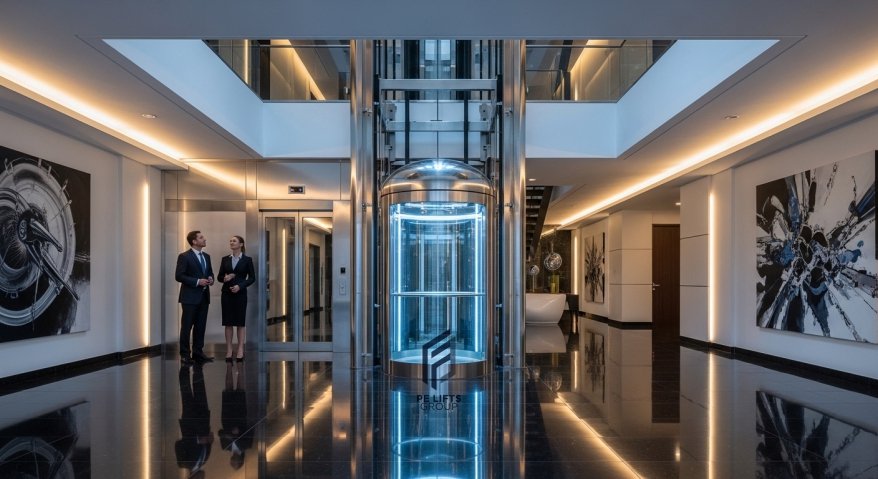
Preparing a comprehensive elevator tender specification is critical for the success of any construction or modernization project. A well-drafted elevator procurement document ensures that developers, architects, and contractors receive accurate, comparable bids.
As an experienced elevator engineering partner, PE Lifts Group helps project teams navigate this complex process. By leveraging the manufacturing capabilities of PE Lifts, the specialized product ranges of Dove Lifts, and the after-sales expertise of PE Lifts Services, we ensure your project runs smoothly from design to handover.
Here is a practical guide to structuring your elevator specification for tender.
1. What is an elevator tender specification?
An elevator tender specification is a detailed technical and commercial document outlining the exact requirements for vertical transportation systems. It forms the core of the elevator procurement document, ensuring all bidding suppliers understand the project scope, technical needs, and contractual obligations.
2. Why is a detailed elevator specification important?
Clear elevator tender requirements prevent costly variations, delays, and compliance failures. A precise specification ensures suppliers provide accurate pricing, guarantees the equipment meets building traffic demands, and ensures all safety and accessibility standards are met before installation begins.
3. What building information should be included?
Your elevator specification for tender must start with comprehensive building data. Include the building type (residential, commercial, hospital), total number of floors, floor-to-floor heights, and expected passenger population. This data allows suppliers to perform accurate traffic analysis and calculate the required number of elevators.
4. What elevator type and application should be specified?
Define the specific elevator technology required. Specify whether you need Machine Room-Less (MRL) traction elevators, geared traction systems, or hydraulic lifts. For specialized applications, clarify if freight, hospital, or observation elevators are needed. [Link to PE Lifts products] and [Link to Dove Lifts specialized solutions] can provide guidance on selecting the right technology.
5. What capacity, speed and number of stops should be defined?
Clearly state the rated capacity (in kg and number of persons) and the rated speed (in meters per second). List the exact number of stops, including any basement levels or penthouse floors. Defining these metrics ensures the elevator tender requirements match the building's vertical traffic flow.
6. What shaft, pit, overhead and machine room requirements should be included?
Provide the exact architectural dimensions for the lift shaft, pit depth, and overhead clearance. If a machine room is required, specify its dimensions and location. Accurate shaft requirements prevent costly civil works modifications during the installation phase.
7. What should be specified for doors, cabin finishes and accessibility?
Detail the door type (center opening, two-speed, or telescopic) and finish. For the cabin, specify wall materials, flooring, ceiling design, and lighting. Crucially, include accessibility requirements, such as Braille buttons, auditory announcements, and mirror placement, to ensure compliance with local accessibility codes.
8. What motor, drive and control requirements should be considered?
Specify the drive technology, typically Variable Voltage Variable Frequency (VVVF), for smooth rides and energy efficiency. Define the control system requirements, such as simplex, duplex, or group control, and indicate if advanced features like destination dispatch or smart card access are needed.
9. What safety, testing and compliance requirements should be stated?
Mandate compliance with current safety standards, such as EN81-20/50 or local equivalents. The elevator procurement document must require third-party testing and certification before handover. Specify the inclusion of safety gears, overspeed governors, and emergency communication systems.
10. What installation, commissioning, warranty and maintenance requirements should be included?
Define the installation timeline, site supervision requirements, and commissioning protocols. Specify the minimum warranty period for parts and labor. Finally, outline the required maintenance contract terms post-handover, which can be seamlessly managed by [Link to PE Lifts Services].
Understanding Specification Types
When drafting elevator tender requirements, it is vital to understand the difference between technical requirements, performance requirements, and supplier-specific proposals.
- Technical Requirements: Dictate exact materials, dimensions, and components (e.g., "use a 10kW motor").
- Performance Requirements: Dictate the desired outcome without restricting the method (e.g., "must achieve a 30-second wait time").
- Supplier-Specific Proposals: Allow bidders to suggest innovative alternatives.
Project teams should avoid writing overly restrictive technical specifications. Focusing on performance requirements encourages suppliers to offer the most efficient and cost-effective solutions without unnecessarily limiting competition.
The Elevator Procurement Process
Follow this streamlined process to ensure a successful procurement journey:
Project Requirements → Technical Specification → Tender Documents → Supplier Responses → Technical Evaluation → Selection → Installation → Testing and Handover
Elevator Tender Specification Checklist
Use this practical checklist to ensure your elevator specification for tender is complete.
| Category | Specification Details to Include |
|---|---|
| Building Data | Building type, height, population, traffic analysis. |
| Elevator Type | Traction, hydraulic, MRL, freight, or passenger. |
| Capacity | Rated load in kg and number of persons. |
| Speed | Rated speed in meters per second (m/s). |
| Travel | Total vertical travel distance. |
| Stops | Number of landings, including basements and roofs. |
| Shaft Requirements | Shaft dimensions, pit depth, overhead clearances. |
| Doors | Door type, opening direction, dimensions, and finish. |
| Cabin | Interior dimensions, wall/ceiling/floor finishes, lighting. |
| Controls | VVVF drives, group control, destination dispatch, interfaces. |
| Safety | EN81/local compliance, safety gears, emergency phones. |
| Power Supply | Voltage, phase, frequency, and backup power needs. |
| Installation | Site timelines, civil work responsibilities, supervision. |
| Testing | Pre-commissioning, third-party testing, load testing. |
| Documentation | As-built drawings, manuals, maintenance schedules. |
| Warranty | Duration of parts and labor coverage post-handover. |
| Maintenance | Service response times, spare parts, SLA requirements. |
Frequently Asked Questions (FAQs)
1. What is the main purpose of an elevator tender specification? It provides a clear, standardized set of technical and commercial requirements so suppliers can submit accurate and comparable bids.
2. Who should write the elevator specification for tender? Typically, a specialized vertical transportation consultant or an experienced engineering partner like PE Lifts Group drafts it to ensure technical accuracy.
3. How do elevator tender requirements affect project costs? Clear requirements prevent scope creep, reduce civil work errors, and ensure suppliers do not add risk premiums to their bids.
4. What is the difference between an elevator tender specification and a procurement document? The specification details the technical needs, while the elevator procurement document includes the specification, commercial terms, and bidding instructions.
5. Should I specify a specific brand in the tender? No. It is best practice to specify performance and technical standards rather than a specific brand to encourage fair competition.
6. How long does the elevator tender process take? From issuing the elevator procurement document to contract signing, the process typically takes 8 to 12 weeks, depending on project complexity.
7. What safety standards must be included in the specification? You must specify compliance with local building codes and international standards like EN81-20 and EN81-50.
8. Can PE Lifts Group help with the tender process? Yes. PE Lifts Group acts as an experienced engineering partner, assisting developers and consultants in drafting robust, compliant specifications.
9. What happens if the shaft dimensions change during construction? The specification should include a clause for handling design changes, though accurate initial planning with PE Lifts minimizes this risk.
10. Who handles elevator maintenance after handover? Post-handover maintenance should be specified in the tender and can be expertly managed by [Link to PE Lifts Services] to ensure long-term reliability.
Partner with PE Lifts Group
Drafting a flawless elevator tender specification requires deep technical expertise and industry insight. Do not leave your vertical transportation strategy to chance.
Engage PE Lifts Group early in your project planning. Whether you need guidance on elevator tender requirements, product selection from PE Lifts and Dove Lifts, or long-term maintenance via PE Lifts Services, our team is ready to support your project from the first drawing to the final handover.
[Contact PE Lifts Group today to optimize your elevator procurement process.]