Shopping malls in Nigeria are more than retail spaces; they are social hubs, entertainment centers, and community landmarks. For mall owners, developers, and facility managers, the success of these complexes depends heavily on how smoothly people move through them. At the heart of this movement is vertical transportation. Effective elevator planning for shopping malls ensures that shoppers, staff, and goods move efficiently, safely, and comfortably across multiple floors.
At PE Lifts Group, we understand that every mall has unique demands. Whether you are developing a new complex in Lagos, Abuja, or Port Harcourt, or modernizing an existing structure, choosing the right elevator strategy is critical. This guide explores the essential considerations for shopping mall elevator Nigeria projects, highlighting how our specialized divisions—Dove Lifts, PE Lifts, and PE Lifts Services—work together to deliver comprehensive solutions.
Why Is Elevator Planning Important for Shopping Malls?
Poorly planned vertical transportation leads to congestion, frustrated shoppers, and lost revenue. In a busy Nigerian mall, long wait times can deter customers from visiting upper-floor restaurants or cinemas. Proper elevator for shopping malls planning ensures optimal traffic flow, enhances accessibility, and supports the overall customer experience. It also protects your investment by ensuring the equipment is suited to the specific load and usage patterns of a commercial environment.
How Should Passenger Traffic Influence Elevator Planning?
Shopping malls experience fluctuating traffic patterns. Weekends, holidays, and evening hours often see peak volumes. Elevator systems must be sized not just for average use, but for these peak periods. Traffic analysis helps determine the number of elevators needed, their speed, and their capacity. Ignoring these factors can result in bottlenecks at entrance levels or overcrowding in cars during rush hours.
How Should Shopping Malls Separate Public and Service Movement?
A common mistake in mall design is mixing public passenger traffic with service operations. Shoppers carrying bags should not share space with delivery trolleys or waste management carts. Effective planning separates these flows. Public elevators focus on comfort, aesthetics, and speed, while service or freight elevators prioritize durability, larger dimensions, and heavy-load capacity. This separation improves hygiene, security, and operational efficiency.
What Elevator Types May Suit Different Mall Applications?
Not every elevator is suitable for every part of a mall. Understanding the strengths of different technologies is key:
- Traction and MRL Systems (Dove Lifts): For mid-to-high-rise mall sections, Dove Lifts provides robust traction and Machine Room-Less (MRL) systems. These are ideal for high-traffic passenger zones where speed and energy efficiency are priorities.
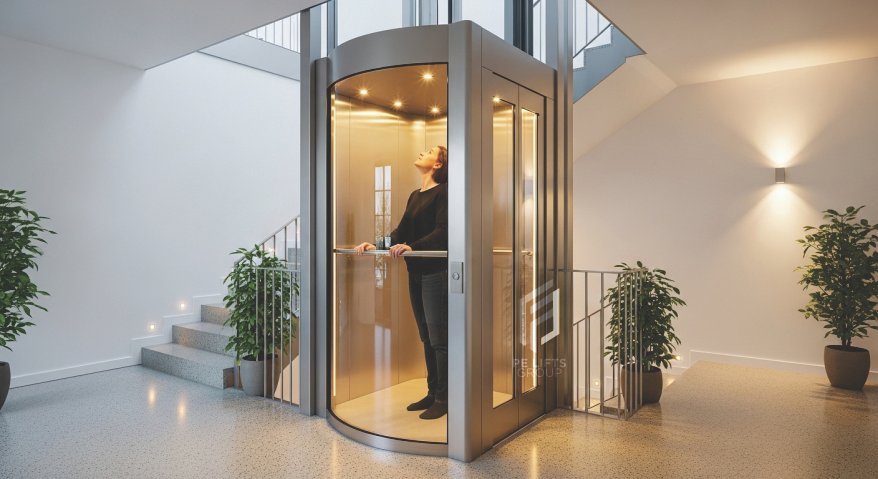
- Pneumatic Solutions (PE Lifts): While less common for high-volume main thoroughfares, PE Lifts’ pneumatic elevators offer unique aesthetic and spatial advantages. They may be suitable for boutique sections, VIP areas, or low-rise annexes where a distinctive, glass-enclosed visual appeal is desired.
- Service and Freight Elevators: Essential for back-of-house operations, these units handle heavy loads, pallets, and frequent use without compromising the passenger experience.
How Should Capacity and Traffic Patterns Be Assessed?
Capacity planning involves analyzing the total floor area, expected footfall, and dwell time per floor. Engineers calculate the handling capacity—the number of passengers an elevator system can move in five minutes. For Nigerian malls, this assessment must account for local shopping behaviors, such as group shopping and extended leisure stays. Accurate data prevents under-specification, which leads to wear and tear, and over-specification, which wastes capital.
Where Should Elevators Be Positioned Within a Mall?
Visibility and accessibility drive elevator placement. Main passenger elevators should be located near primary anchors like department stores, food courts, or cinema entrances. They should be easy to find but not obstruct main walkways. Service elevators, conversely, should be positioned near loading bays and service corridors, hidden from public view but easily accessible to staff.
What Should Owners Consider for Accessibility and Passenger Convenience?
Nigerian building codes and international best practices emphasize inclusivity. Elevators must accommodate wheelchairs, strollers, and shoppers with mobility challenges. Features like wide doors, low-threshold entries, audible announcements, and Braille buttons are essential. Convenience also means intuitive controls and clear signage, ensuring that first-time visitors can navigate the mall effortlessly.
How Should Elevators Coordinate With Escalators and Other Vertical Transportation?
Elevators do not work in isolation. They complement escalators, which handle continuous, high-volume flow between adjacent floors. A balanced strategy uses escalators for short-distance, high-throughput movement and elevators for longer distances, accessibility, and peak overflow. Integrated planning ensures these systems work in harmony, reducing congestion at landing areas.
Why Are Maintenance and Uptime Important for Mall Operations?
A broken elevator in a mall is more than an inconvenience; it is a reputational risk. Continuous uptime is vital for maintaining shopper confidence and tenant satisfaction. Regular maintenance prevents unexpected breakdowns and extends equipment life. PE Lifts Services specializes in proactive maintenance, modernization, and technical support, ensuring that your vertical transportation systems remain reliable year-round.
What Should Nigerian Mall Owners Consider When Selecting an Elevator Partner?
Choosing the right partner involves looking beyond price. Consider engineering expertise, local support capabilities, and the ability to provide tailored solutions. PE Lifts Group offers a holistic approach: Dove Lifts handles complex traction installations, PE Lifts provides innovative pneumatic options where appropriate, and PE Lifts Services ensures long-term reliability. This integrated model simplifies procurement and accountability for developers and facility managers.
Comparison of Vertical Transportation Options for Malls
| Feature | Passenger Elevators | Service/Freight Elevators | Escalators |
|---|---|---|---|
| Primary Purpose | Moving shoppers and visitors | Moving goods, trolleys, and staff | Continuous flow between adjacent floors |
| Users | General public, families, elderly | Delivery personnel, cleaners, security | High-volume shopper traffic |
| Traffic Demands | Peak-hour bursts, mixed groups | Steady, heavy loads, frequent cycles | Constant, high-frequency movement |
| Planning Considerations | Speed, comfort, aesthetics, accessibility | Durability, door size, load capacity | Placement, angle, safety sensors, integration |
The Mall Elevator Planning Flow
- Mall Design: Define floor plans and anchor locations.
- Traffic Assessment: Analyze expected footfall and peak times.
- Elevator Strategy: Determine mix of passenger, service, and specialty lifts.
- Equipment Selection: Choose technologies (Traction/MRL via Dove Lifts, Pneumatic via PE Lifts).
- Installation: Professional execution by certified teams.
- Testing: Rigorous safety and performance checks.
- Handover: Training for facility management teams.
- Maintenance: Ongoing support via PE Lifts Services.
Frequently Asked Questions (FAQs)
1. What is the best elevator type for a large shopping mall in Nigeria? For high-traffic areas, traction or MRL systems from Dove Lifts are typically recommended due to their speed and efficiency. Pneumatic elevators from PE Lifts may suit specific aesthetic or low-rise applications.
2. How many elevators does a shopping mall need? This depends on floor area, height, and expected traffic. A professional traffic analysis is required to determine the optimal number and capacity.
3. Can pneumatic elevators be used in shopping malls? Yes, particularly for boutique sections, VIP lounges, or architectural features where their unique glass design adds value. They are less suited for high-volume main corridors.
4. How important is maintenance for mall elevators? Critical. Regular maintenance by PE Lifts Services ensures uptime, safety, and longevity, preventing costly disruptions during peak shopping periods.
5. Do mall elevators need to be accessible? Yes. Compliance with accessibility standards is mandatory and ethical, ensuring all shoppers, including those with disabilities, can navigate the mall easily.
6. How do I separate service and passenger traffic? By installing dedicated service elevators located near loading bays and using separate control systems to prevent public access.
7. What role do escalators play in mall elevator planning? Escalators handle continuous, short-distance flow, reducing the load on elevators. They should be planned in conjunction with elevator banks for optimal traffic distribution.
8. How long does mall elevator installation take? Timelines vary based on complexity and building stage, but proper planning and coordination with construction teams can streamline the process.
9. Why choose PE Lifts Group for mall projects? We offer a complete ecosystem: Dove Lifts for traction technology, PE Lifts for pneumatic innovation, and PE Lifts Services for lifelong maintenance, providing a single point of accountability.
10. Can existing mall elevators be modernized? Absolutely. PE Lifts Services specializes in modernization, upgrading older systems with new controls, doors, and safety features to improve performance and efficiency.
Partner With PE Lifts Group for Your Next Mall Project
Effective mall elevator installation Nigeria requires foresight, expertise, and a partner who understands the local context. Don’t leave vertical transportation to chance. Involve PE Lifts Group early in your design phase to create a seamless, efficient, and impressive shopping environment. Contact our team today to discuss how our integrated solutions can elevate your mall’s success.